Volume 23, Issue 1 (3-2026)
J Res Dev Nurs Midw 2026, 23(1): 11-16 |
Back to browse issues page



Download citation:
BibTeX | RIS | EndNote | Medlars | ProCite | Reference Manager | RefWorks
Send citation to:


BibTeX | RIS | EndNote | Medlars | ProCite | Reference Manager | RefWorks
Send citation to:
Karakoç H, Altinkaynak H, Nur Bircan C. Generational comparison of marital adjustment, pregnancy acceptance, and maternal role among married pregnant women from generation Y and generation Z in Türkiye. J Res Dev Nurs Midw 2026; 23 (1) :11-16
URL: http://nmj.goums.ac.ir/article-1-2191-en.html
URL: http://nmj.goums.ac.ir/article-1-2191-en.html


1- Department of Midwifery, Faculty of Health Sciences, KTO Karatay University, Konya, Turkey , hediye.bekmezci@karatay.edu.tr
2- Kızılay Hospital, Delivery Room, Konya, Turkey
3- Konya Karatay 85 No Family Health Center, Konya, Turkey
2- Kızılay Hospital, Delivery Room, Konya, Turkey
3- Konya Karatay 85 No Family Health Center, Konya, Turkey
Full-Text [PDF 465 kb]
(244 Downloads)
| Abstract (HTML) (1376 Views)
Discussion
This study compared Generation Y and Generation Z pregnant women in terms of marital adjustment, pregnancy acceptance, and acceptance of the maternal role. Because the participants belonged to different age groups, differences in age, spouse’s age, number of pregnancies, duration of marriage, and history of miscarriage/stillbirth were expected. A higher proportion of participants in Generation Y were also employed.
In the Generation Z group, a greater proportion of participants had married after mutual acquaintance and agreement. Generation Z, born in 1995 and later, has been shaped by distinct social, cultural, and economic dynamics. Factors such as social media, internet use, career-oriented lifestyles, and the questioning of traditional gender norms may influence Generation Z’s views on marriage and marital formation. Previous studies have shown that exposure to the internet significantly reduces age at first marriage (21) and that women earning more than men may negatively affect marital satisfaction (22). These findings suggest that Generation Z may have moved away from traditional gender roles toward a more egalitarian understanding of marriage, which may also influence marriage patterns. In addition, arranged marriages have been reported to be decreasing not only in our country but also worldwide (23,24).
In Generation Z, marital adjustment was negatively correlated with duration of marriage and number of pregnancies; this association was not statistically significant in Generation Y. These findings may reflect evolving marital expectations across generations, which could contribute to differences in marital adjustment (25). Increasing expectations may negatively affect marital adjustment. In particular, economic independence, interference with personal characteristics, family involvement, sexual problems, and unmet expectations have been reported as direct factors influencing women’s marital satisfaction (26).
Participants in Generation Z with planned pregnancies had higher marital adjustment. Previous studies have similarly indicated that women with planned pregnancies tend to report higher marital adjustment (27,28). Baş (25) noted that, despite changing expectations from marriage across generations, the desire to have children remains a common marital expectation across all three generations. Consistent with this, the present findings suggest that planned pregnancy, aligned with the desire to have children, may positively influence marital satisfaction.
In the present study, bivariate analyses showed a significant difference between Generation Y and Generation Z in marital adjustment, with Generation Y reporting higher mean scores. However, no statistically significant differences were observed between generations in pregnancy acceptance or maternal role adaptation. These findings suggest that relational dynamics may differ across generations, whereas core aspects of psychosocial adaptation to pregnancy may remain comparable.
Previous research has emphasized that maternal acceptance and relational harmony are closely linked to women’s psychological well-being and family functioning (29). The absence of generational differences in pregnancy acceptance and maternal role adaptation may indicate that the transition to motherhood involves universal psychosocial processes that extend beyond generational boundaries. As noted by Baş (25), the desire to have children remains a shared marital expectation across generations, which may help explain the similarity observed in pregnancy-related adaptation outcomes.
Although a significant difference in marital adjustment was observed between generations in bivariate analyses, this association did not remain statistically significant after adjustment for age, duration of marriage, number of pregnancies, employment status, and planned pregnancy. Given the substantial overlap between generational belonging and life-stage characteristics in the present sample, attenuation of the association after adjustment may reflect the influence of underlying sociodemographic and developmental factors. Therefore, the findings should not be interpreted as definitive evidence for the absence of generational differences. Rather, they suggest that the relationship between generational identity and marital adjustment during pregnancy is likely intertwined with age- and life-stage-related influences, which cannot be fully disentangled within a cross-sectional design. Moreover, because the overall regression model was not statistically significant, the adjusted findings should be interpreted cautiously, and no strong conclusions can be drawn regarding the independent contribution of generational belonging to marital adjustment.
This study contributes to the limited literature on psychosocial adaptation during pregnancy across generational groups by evaluating marital adjustment, pregnancy acceptance, and maternal role adaptation within the same sociocultural context. The use of validated measurement instruments and multivariable analyses strengthened the methodological approach. Nevertheless, several limitations should be considered. The cross-sectional design precludes causal interpretation and limits differentiation between generational and life-stage effects. Because generational belonging is inherently associated with life-stage characteristics such as age, duration of marriage, and reproductive history, estimation of a purely generational effect should be interpreted cautiously. Furthermore, non-probability convenience sampling through social media platforms may have reduced generalizability and introduced selection bias. High-risk pregnancy status was determined by self-report and could not be verified through medical records because of the anonymous online data collection process. Future studies should use probability-based sampling methods and medical record verification to improve external validity and diagnostic accuracy.
Conclusion
The findings of this study initially suggested a generational difference in marital adjustment between Generation Y and Generation Z pregnant women. However, this difference did not remain statistically significant after adjustment for sociodemographic and reproductive characteristics. These findings suggest that marital adjustment during pregnancy may be associated with life-stage characteristics, including age, duration of marriage, and reproductive history, in addition to generational identity. In contrast, pregnancy acceptance and maternal role adaptation did not differ between generations, supporting the view that core aspects of psychosocial adaptation to pregnancy may transcend generational classifications. From a clinical perspective, these findings highlight the importance of individualized psychosocial assessment in prenatal care. Rather than relying solely on generational categorization, healthcare professionals should consider relational, developmental, and contextual factors when evaluating marital adjustment and psychosocial well-being during pregnancy.
Acknowledgement
The authors would like to thank all participants who took part in this study.
Funding Sources
This research received no specific grant from any funding agency in the public, commercial, or not-for-profit sectors.
Ethical Statement
Ethical approval was obtained from the Ethics Committee for Drug and Non-Medical Device Research at KTO Karatay University (Dated December 17, 2023, number 11). The study was conducted in accordance with the ethical principles outlined in the Declaration of Helsinki.
Conflicts of Interest
The authors declare that they have no competing interests.
Author Contributions
Conceptualization (H.K; H.A; C.B); Formal analysis (H.K; H.A; C.B); Investigation (H.K; H.A; C.B); Methodology (H.K; H.A; C.B); Project administration (H.K; H.A; C.B); Resources (H.K; H.A; C.B); Supervision (H.K); Writing - Original draft (H.K); Writing - Review and Editing (H.K).
Data Availability Statement
The data supporting the findings of this study are available from the corresponding author upon reasonable request, subject to review and confidentiality considerations.
Use of Artificial Intelligence
AI-assisted tools were used to support language editing. These tools were not involved in data analysis, scientific content development, interpretation of results, or scientific decision-making.
Full-Text: (76 Views)
Introduction
A generation is defined as "a group of individuals forming approximately 25-30-year age cohorts" (1). In the literature, generations are commonly categorized sequentially as the Silent Generation, Baby Boomers, Generation X, Generation Y, Generation Z, and Generation Alpha (2). According to birth-year ranges, individuals born between 1965 and 1979 are classified as Generation X, those born between 1980 and 1994 as Generation Y, and those born between 1995 and 2005 as Generation Z (3). Although definitive boundaries between generations cannot be drawn, individuals within the same generation often share broadly similar characteristics, including comparable judgments, expectations, and moral attributes (2).
Generational differences may also shape how women approach pregnancy, childbirth, and the postpartum period. Practices, perceptions, reactions, and interpretations of these life events may therefore vary across generations (4).
Couple adjustment refers to the ability of spouses with different personalities to complement one another while pursuing shared goals of happiness and partnership (5). Demographic studies have demonstrated a clear relationship between age and marital adjustment (6,7). Güneş et al. (8) reported that individuals who married at a younger age had lower couple adjustment, whereas adults showed higher levels of adjustment.
Acquisition of the maternal role is defined as the process through which the mother adapts to the baby and develops maternal behaviors (9). When a high-quality spousal relationship is present during pregnancy, women may be better able to accept their pregnancy, adapt positively to pregnancy-related changes, and internalize the maternal role (10,11). Qualitative studies indicate that, as maternal age increases, women tend to report less desire for perfection and fewer feelings of guilt regarding the maternal role (12,13).
International studies have shown that marital adjustment is associated with psychosocial adaptation during pregnancy. Fiskin et al. (14) reported significant associations between dyadic adjustment and prenatal attachment, suggesting that the quality of the couple relationship may influence emotional bonding during pregnancy. Similarly, Özcan et al. (15) demonstrated a relationship between marital adjustment and prenatal attachment, emphasizing the link between relational harmony and maternal psychological well-being. The relationship between prenatal adaptation and development of the maternal role has also been highlighted in the literature, with evidence suggesting that successful adaptation to pregnancy facilitates internalization and consolidation of the maternal role (16). Given generational differences in spousal relationships, perceptions of the maternal role, access to technology and information, and gender-role expectations, pregnancy acceptance and maternal role acceptance may differ across generations. However, although age has been examined in previous studies, direct generational comparisons in this context remain lacking.
Accordingly, this study aimed to compare marital adjustment, pregnancy acceptance, and maternal role acceptance across generations of pregnant women. Understanding these differences may support the development of more responsive health services, family counseling services, and parenting education programs. By considering the distinctive dynamics and experiences of each generation, the findings may contribute to policies and support programs tailored to generational needs.
Methods
Study design
This study was conducted as a cross-sectional study with a descriptive survey design.
Population and sample
The study population consisted of pregnant women born between 1980 and 2005 (Generation Y and Generation Z) who were recruited between November 30, 2022, and February 29, 2023. The sample size was determined based on the study by Demirezen and Duran Aksoy (10), which reported a mean maternal role acceptance score of 23.5 ± 4.8. Assuming a two-unit difference, 95% power, and alpha = 0.05, the minimum required sample size was calculated as 302 participants. To account for incomplete responses and potential attrition associated with online data collection, the target sample size was increased by approximately 15% beyond the minimum requirement.
Inclusion criteria were birth between 1980 and 2005, being married, being pregnant at any gestational week, being literate, and voluntarily agreeing to participate. To reduce potential confounding related to obstetric complications, women with clinically diagnosed high-risk pregnancies were excluded. Because data were collected anonymously through an online survey, medical records could not be accessed or independently verified; therefore, high-risk pregnancy status was based entirely on participants’ self-report. A total of 377 questionnaires were received through the online survey link distributed on social media platforms. After data screening, 30 responses were excluded because of incomplete or inconsistent answering patterns. The final sample comprised 347 eligible participants.
High-risk pregnancy status was determined by participant self-report. In the personal information form, women were asked whether a healthcare professional had informed them that their pregnancy was classified as high-risk (e.g., because of preeclampsia, gestational diabetes, placenta previa, multiple pregnancy, or other obstetric complications). Participants who reported a clinically diagnosed high-risk pregnancy were excluded. Owing to the online nature of data collection, medical records were not reviewed or independently verified.
Data collection tools
Data were collected using the Personal Information Form, the Prenatal Self-Evaluation Questionnaire, and the Marital Adjustment Test.
1. Personal Information Form: This form included 13 questions assessing participants' sociodemographic characteristics (Age, educational status of the pregnant woman and her spouse, employment status, place of residence, duration of marriage, and type of marriage) and obstetric characteristics (Number of pregnancies, number of births, history of miscarriage/stillbirth, gestational week, planned pregnancy status, spouse's desire for pregnancy, and healthcare provider conducting prenatal check-ups).
2. Prenatal Self-Evaluation Questionnaire: This scale, originally developed by Lederman (17), was adapted into Turkish by Beydağ Taşçı and Mete (18), who demonstrated satisfactory validity and reliability. The questionnaire consists of 79 items across seven subscales and uses a 4-point Likert-type response format. Each item is scored from 1 (Does not describe me at all) to 4 (Describes me very much). Subscale scores are calculated by summing item responses, and lower scores indicate greater adaptation to pregnancy and the maternal role. In the present study, the Acceptance of Pregnancy and Acceptance of the Maternal Role subscales were used. Scores range from 14 to 56 for the Acceptance of Pregnancy subscale and from 15 to 60 for the Acceptance of the Maternal Role subscale, with lower scores indicating higher adaptation. Cronbach’s alpha reliability coefficients for these subscales were reported as 0.88 and 0.89, respectively.
3. Marital Adjustment Test: This scale, developed by Locke and Wallace (19) to assess the quality of marital relationships, was adapted into Turkish by Kışlak (20). The scale consists of 15 items with weighted response options. Item 1 is scored between 0 and 6 points; items 2-9 are scored between 0 and 5 points; items 10 and 14 are scored between 0 and 2 points; items 11 and 13 are scored between 0 and 3 points; and item 15 is scored between 0 and 2 points. Item 12 is scored according to spousal agreement regarding leisure preferences: 0 points when one spouse prefers staying at home and the other prefers going out, 1 point when both prefer going out, and 2 points when both prefer staying at home. Total scores range from 0 to 60, with higher scores indicating greater marital adjustment. A score of 43 or above indicates marital harmony, whereas scores below 43 indicate disharmony. The Cronbach’s alpha reliability coefficient was reported as 0.84.
Data collection
Data were collected online using Google Forms, which were prepared and uploaded by the researchers. Invitations to participate were shared in pregnancy-focused social media groups (Facebook, WhatsApp, and Instagram). Participants provided written consent by selecting the statement, "I have read the above information and voluntarily agree to participate in this study." After providing consent, participants completed the forms online through Google Forms. Responses were then transferred to a statistical analysis program for evaluation. Because the survey link was distributed through open social media platforms, the exact number of individuals who viewed the invitation could not be determined; therefore, a response rate could not be calculated. Of the 377 submitted questionnaires, 347 were complete and eligible for analysis, corresponding to a completion rate of 92%.
Analysis
Data were analyzed using SPSS version 27 (IBM Corp., Armonk, NY, USA). The normality of continuous variables was assessed using the Kolmogorov-Smirnov and Shapiro-Wilk tests. Homogeneity of variance was evaluated using Levene’s test. Descriptive statistics were presented as frequencies, percentages, means, and standard deviations. Between-group comparisons were performed using independent-samples t-tests for continuous variables and chi-square tests for categorical variables. For comparisons involving more than two groups, one-way ANOVA or non-parametric equivalents were applied as appropriate. To determine whether generational belonging remained independently associated with marital adjustment after controlling for potential confounders, multiple linear regression analysis was conducted. Marital adjustment score was entered as the dependent variable. Generation (Generation Y = 0, Generation Z = 1) was entered as the main independent variable. Age, duration of marriage, number of pregnancies, employment status (0 = not working, 1 = working), and planned pregnancy status (0 = no, 1 = yes) were entered as covariates. Collinearity diagnostics were examined using tolerance and variance inflation factor (VIF) values. Statistical significance was set at p < 0.05.
Generational classification was based on commonly used birth-year ranges in the literature (1980-1994 for Generation Y and 1995-2005 for Generation Z). Participants were classified strictly according to their self-reported year of birth. Although generational boundaries are inherently approximate, the proportion of participants born in the boundary years (1994-1995) was low (Approximately 5%); therefore, meaningful misclassification-related bias was considered unlikely.
Results
Sociodemographic and obstetric characteristics of the participants
A total of 347 pregnant women participated in the study, including 170 women in Generation Y and 177 women in Generation Z. Participants’ sociodemographic and obstetric characteristics are presented in Tables 1 and 2.
Significant differences were observed between the groups in age, spouse’s age, number of pregnancies, duration of marriage, employment status, type of marriage, and history of miscarriage/stillbirth (All p < 0.05). Compared with Generation Z, women in Generation Y were older, had older spouses, reported more pregnancies, had longer durations of marriage, had higher employment rates, and more frequently reported a history of miscarriage/stillbirth. In contrast, marriages based on mutual acquaintance and agreement were more common among women in Generation Z. No significant differences were found in gestational age, educational status, spouse’s educational status, or planned pregnancy status (All p > 0.05).
A generation is defined as "a group of individuals forming approximately 25-30-year age cohorts" (1). In the literature, generations are commonly categorized sequentially as the Silent Generation, Baby Boomers, Generation X, Generation Y, Generation Z, and Generation Alpha (2). According to birth-year ranges, individuals born between 1965 and 1979 are classified as Generation X, those born between 1980 and 1994 as Generation Y, and those born between 1995 and 2005 as Generation Z (3). Although definitive boundaries between generations cannot be drawn, individuals within the same generation often share broadly similar characteristics, including comparable judgments, expectations, and moral attributes (2).
Generational differences may also shape how women approach pregnancy, childbirth, and the postpartum period. Practices, perceptions, reactions, and interpretations of these life events may therefore vary across generations (4).
Couple adjustment refers to the ability of spouses with different personalities to complement one another while pursuing shared goals of happiness and partnership (5). Demographic studies have demonstrated a clear relationship between age and marital adjustment (6,7). Güneş et al. (8) reported that individuals who married at a younger age had lower couple adjustment, whereas adults showed higher levels of adjustment.
Acquisition of the maternal role is defined as the process through which the mother adapts to the baby and develops maternal behaviors (9). When a high-quality spousal relationship is present during pregnancy, women may be better able to accept their pregnancy, adapt positively to pregnancy-related changes, and internalize the maternal role (10,11). Qualitative studies indicate that, as maternal age increases, women tend to report less desire for perfection and fewer feelings of guilt regarding the maternal role (12,13).
International studies have shown that marital adjustment is associated with psychosocial adaptation during pregnancy. Fiskin et al. (14) reported significant associations between dyadic adjustment and prenatal attachment, suggesting that the quality of the couple relationship may influence emotional bonding during pregnancy. Similarly, Özcan et al. (15) demonstrated a relationship between marital adjustment and prenatal attachment, emphasizing the link between relational harmony and maternal psychological well-being. The relationship between prenatal adaptation and development of the maternal role has also been highlighted in the literature, with evidence suggesting that successful adaptation to pregnancy facilitates internalization and consolidation of the maternal role (16). Given generational differences in spousal relationships, perceptions of the maternal role, access to technology and information, and gender-role expectations, pregnancy acceptance and maternal role acceptance may differ across generations. However, although age has been examined in previous studies, direct generational comparisons in this context remain lacking.
Accordingly, this study aimed to compare marital adjustment, pregnancy acceptance, and maternal role acceptance across generations of pregnant women. Understanding these differences may support the development of more responsive health services, family counseling services, and parenting education programs. By considering the distinctive dynamics and experiences of each generation, the findings may contribute to policies and support programs tailored to generational needs.
Methods
Study design
This study was conducted as a cross-sectional study with a descriptive survey design.
Population and sample
The study population consisted of pregnant women born between 1980 and 2005 (Generation Y and Generation Z) who were recruited between November 30, 2022, and February 29, 2023. The sample size was determined based on the study by Demirezen and Duran Aksoy (10), which reported a mean maternal role acceptance score of 23.5 ± 4.8. Assuming a two-unit difference, 95% power, and alpha = 0.05, the minimum required sample size was calculated as 302 participants. To account for incomplete responses and potential attrition associated with online data collection, the target sample size was increased by approximately 15% beyond the minimum requirement.
Inclusion criteria were birth between 1980 and 2005, being married, being pregnant at any gestational week, being literate, and voluntarily agreeing to participate. To reduce potential confounding related to obstetric complications, women with clinically diagnosed high-risk pregnancies were excluded. Because data were collected anonymously through an online survey, medical records could not be accessed or independently verified; therefore, high-risk pregnancy status was based entirely on participants’ self-report. A total of 377 questionnaires were received through the online survey link distributed on social media platforms. After data screening, 30 responses were excluded because of incomplete or inconsistent answering patterns. The final sample comprised 347 eligible participants.
High-risk pregnancy status was determined by participant self-report. In the personal information form, women were asked whether a healthcare professional had informed them that their pregnancy was classified as high-risk (e.g., because of preeclampsia, gestational diabetes, placenta previa, multiple pregnancy, or other obstetric complications). Participants who reported a clinically diagnosed high-risk pregnancy were excluded. Owing to the online nature of data collection, medical records were not reviewed or independently verified.
Data collection tools
Data were collected using the Personal Information Form, the Prenatal Self-Evaluation Questionnaire, and the Marital Adjustment Test.
1. Personal Information Form: This form included 13 questions assessing participants' sociodemographic characteristics (Age, educational status of the pregnant woman and her spouse, employment status, place of residence, duration of marriage, and type of marriage) and obstetric characteristics (Number of pregnancies, number of births, history of miscarriage/stillbirth, gestational week, planned pregnancy status, spouse's desire for pregnancy, and healthcare provider conducting prenatal check-ups).
2. Prenatal Self-Evaluation Questionnaire: This scale, originally developed by Lederman (17), was adapted into Turkish by Beydağ Taşçı and Mete (18), who demonstrated satisfactory validity and reliability. The questionnaire consists of 79 items across seven subscales and uses a 4-point Likert-type response format. Each item is scored from 1 (Does not describe me at all) to 4 (Describes me very much). Subscale scores are calculated by summing item responses, and lower scores indicate greater adaptation to pregnancy and the maternal role. In the present study, the Acceptance of Pregnancy and Acceptance of the Maternal Role subscales were used. Scores range from 14 to 56 for the Acceptance of Pregnancy subscale and from 15 to 60 for the Acceptance of the Maternal Role subscale, with lower scores indicating higher adaptation. Cronbach’s alpha reliability coefficients for these subscales were reported as 0.88 and 0.89, respectively.
3. Marital Adjustment Test: This scale, developed by Locke and Wallace (19) to assess the quality of marital relationships, was adapted into Turkish by Kışlak (20). The scale consists of 15 items with weighted response options. Item 1 is scored between 0 and 6 points; items 2-9 are scored between 0 and 5 points; items 10 and 14 are scored between 0 and 2 points; items 11 and 13 are scored between 0 and 3 points; and item 15 is scored between 0 and 2 points. Item 12 is scored according to spousal agreement regarding leisure preferences: 0 points when one spouse prefers staying at home and the other prefers going out, 1 point when both prefer going out, and 2 points when both prefer staying at home. Total scores range from 0 to 60, with higher scores indicating greater marital adjustment. A score of 43 or above indicates marital harmony, whereas scores below 43 indicate disharmony. The Cronbach’s alpha reliability coefficient was reported as 0.84.
Data collection
Data were collected online using Google Forms, which were prepared and uploaded by the researchers. Invitations to participate were shared in pregnancy-focused social media groups (Facebook, WhatsApp, and Instagram). Participants provided written consent by selecting the statement, "I have read the above information and voluntarily agree to participate in this study." After providing consent, participants completed the forms online through Google Forms. Responses were then transferred to a statistical analysis program for evaluation. Because the survey link was distributed through open social media platforms, the exact number of individuals who viewed the invitation could not be determined; therefore, a response rate could not be calculated. Of the 377 submitted questionnaires, 347 were complete and eligible for analysis, corresponding to a completion rate of 92%.
Analysis
Data were analyzed using SPSS version 27 (IBM Corp., Armonk, NY, USA). The normality of continuous variables was assessed using the Kolmogorov-Smirnov and Shapiro-Wilk tests. Homogeneity of variance was evaluated using Levene’s test. Descriptive statistics were presented as frequencies, percentages, means, and standard deviations. Between-group comparisons were performed using independent-samples t-tests for continuous variables and chi-square tests for categorical variables. For comparisons involving more than two groups, one-way ANOVA or non-parametric equivalents were applied as appropriate. To determine whether generational belonging remained independently associated with marital adjustment after controlling for potential confounders, multiple linear regression analysis was conducted. Marital adjustment score was entered as the dependent variable. Generation (Generation Y = 0, Generation Z = 1) was entered as the main independent variable. Age, duration of marriage, number of pregnancies, employment status (0 = not working, 1 = working), and planned pregnancy status (0 = no, 1 = yes) were entered as covariates. Collinearity diagnostics were examined using tolerance and variance inflation factor (VIF) values. Statistical significance was set at p < 0.05.
Generational classification was based on commonly used birth-year ranges in the literature (1980-1994 for Generation Y and 1995-2005 for Generation Z). Participants were classified strictly according to their self-reported year of birth. Although generational boundaries are inherently approximate, the proportion of participants born in the boundary years (1994-1995) was low (Approximately 5%); therefore, meaningful misclassification-related bias was considered unlikely.
Results
Sociodemographic and obstetric characteristics of the participants
A total of 347 pregnant women participated in the study, including 170 women in Generation Y and 177 women in Generation Z. Participants’ sociodemographic and obstetric characteristics are presented in Tables 1 and 2.
Significant differences were observed between the groups in age, spouse’s age, number of pregnancies, duration of marriage, employment status, type of marriage, and history of miscarriage/stillbirth (All p < 0.05). Compared with Generation Z, women in Generation Y were older, had older spouses, reported more pregnancies, had longer durations of marriage, had higher employment rates, and more frequently reported a history of miscarriage/stillbirth. In contrast, marriages based on mutual acquaintance and agreement were more common among women in Generation Z. No significant differences were found in gestational age, educational status, spouse’s educational status, or planned pregnancy status (All p > 0.05).
|
Table 1. Comparison of continuous sociodemographic and obstetric characteristics between Generation Y and Generation Z participants
.PNG) * Independent-samples t-test Table 2. Comparison of categorical sociodemographic and obstetric characteristics between Generation Y and Generation Z participants .PNG) Test used for all categorical variables: Pearson chi-square test. ¹ Note: The p-value in the original table was given as 0.83, which likely means 0.083 (χ² = 6.676, df = 3 → p ≈ 0.083). |
Factors affecting marital adjustment by generation
In the Generation Y group, no significant association was found between sociodemographic or obstetric characteristics and mean marital adjustment scores. In the Generation Z group, duration of marriage (p = 0.007), number of pregnancies (p = 0.044), and planned pregnancy status (p = 0.037) were significantly associated with mean marital adjustment scores. Specifically, longer marriage duration and a higher number of pregnancies were associated with lower marital adjustment, whereas planned pregnancy was associated with higher marital adjustment (Table 3).
Comparison of groups according to mean scale scores
As shown in Table 4, no significant differences were observed between Generation Y and Generation Z in acceptance of pregnancy (t = 1.056, p = 0.292) or acceptance of the maternal role (t = 0.389, p = 0.698). Effect-size estimates indicated very small between-group differences for pregnancy acceptance (Hedges g = 0.11, 95% CI -0.10 to 0.33) and maternal role adaptation (Hedges g = 0.04, 95% CI -0.17 to 0.25). In the bivariate analysis, marital adjustment scores were significantly higher in Generation Y than in Generation Z (t = 2.24, p = 0.026), with a small effect size (Hedges g = 0.30, 95% CI 0.09 to 0.51).
Multivariable analysis of marital adjustment
Multiple linear regression analysis was conducted to examine whether generational belonging remained associated with marital adjustment after adjustment for age, duration of marriage, number of pregnancies, employment status, and planned pregnancy. As presented in Table 5, the overall regression model was not statistically significant (F (6,340) = 1.811, p = 0.096). In the adjusted model, generational belonging was not significantly associated with marital adjustment (β = -0.148, p = 0.122). However, because the overall model was not significant, these adjusted findings should be interpreted cautiously.
In the Generation Y group, no significant association was found between sociodemographic or obstetric characteristics and mean marital adjustment scores. In the Generation Z group, duration of marriage (p = 0.007), number of pregnancies (p = 0.044), and planned pregnancy status (p = 0.037) were significantly associated with mean marital adjustment scores. Specifically, longer marriage duration and a higher number of pregnancies were associated with lower marital adjustment, whereas planned pregnancy was associated with higher marital adjustment (Table 3).
Comparison of groups according to mean scale scores
As shown in Table 4, no significant differences were observed between Generation Y and Generation Z in acceptance of pregnancy (t = 1.056, p = 0.292) or acceptance of the maternal role (t = 0.389, p = 0.698). Effect-size estimates indicated very small between-group differences for pregnancy acceptance (Hedges g = 0.11, 95% CI -0.10 to 0.33) and maternal role adaptation (Hedges g = 0.04, 95% CI -0.17 to 0.25). In the bivariate analysis, marital adjustment scores were significantly higher in Generation Y than in Generation Z (t = 2.24, p = 0.026), with a small effect size (Hedges g = 0.30, 95% CI 0.09 to 0.51).
Multivariable analysis of marital adjustment
Multiple linear regression analysis was conducted to examine whether generational belonging remained associated with marital adjustment after adjustment for age, duration of marriage, number of pregnancies, employment status, and planned pregnancy. As presented in Table 5, the overall regression model was not statistically significant (F (6,340) = 1.811, p = 0.096). In the adjusted model, generational belonging was not significantly associated with marital adjustment (β = -0.148, p = 0.122). However, because the overall model was not significant, these adjusted findings should be interpreted cautiously.
|
Table 3. Factors affecting marital adjustment according to generation
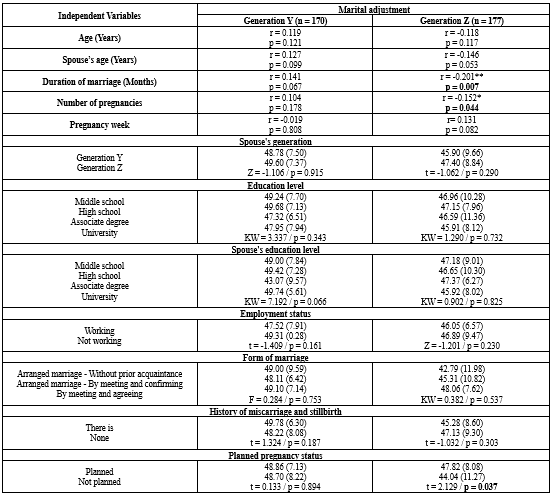 Table 4. Comparison of scale scores between generations .PNG) Values are presented as mean (Standard deviation). Between-group comparisons were conducted using independent-samples t-tests. Effect sizes are reported as Hedges g with 95% confidence intervals. Table 5. Multiple linear regression analysis predicting marital adjustment .PNG) Generation was coded as 0 = Generation Y and 1 = Generation Z. Employment status was coded as 0 = not working and 1 = working. Planned pregnancy was coded as 0 = no and 1 = yes. |
Discussion
This study compared Generation Y and Generation Z pregnant women in terms of marital adjustment, pregnancy acceptance, and acceptance of the maternal role. Because the participants belonged to different age groups, differences in age, spouse’s age, number of pregnancies, duration of marriage, and history of miscarriage/stillbirth were expected. A higher proportion of participants in Generation Y were also employed.
In the Generation Z group, a greater proportion of participants had married after mutual acquaintance and agreement. Generation Z, born in 1995 and later, has been shaped by distinct social, cultural, and economic dynamics. Factors such as social media, internet use, career-oriented lifestyles, and the questioning of traditional gender norms may influence Generation Z’s views on marriage and marital formation. Previous studies have shown that exposure to the internet significantly reduces age at first marriage (21) and that women earning more than men may negatively affect marital satisfaction (22). These findings suggest that Generation Z may have moved away from traditional gender roles toward a more egalitarian understanding of marriage, which may also influence marriage patterns. In addition, arranged marriages have been reported to be decreasing not only in our country but also worldwide (23,24).
In Generation Z, marital adjustment was negatively correlated with duration of marriage and number of pregnancies; this association was not statistically significant in Generation Y. These findings may reflect evolving marital expectations across generations, which could contribute to differences in marital adjustment (25). Increasing expectations may negatively affect marital adjustment. In particular, economic independence, interference with personal characteristics, family involvement, sexual problems, and unmet expectations have been reported as direct factors influencing women’s marital satisfaction (26).
Participants in Generation Z with planned pregnancies had higher marital adjustment. Previous studies have similarly indicated that women with planned pregnancies tend to report higher marital adjustment (27,28). Baş (25) noted that, despite changing expectations from marriage across generations, the desire to have children remains a common marital expectation across all three generations. Consistent with this, the present findings suggest that planned pregnancy, aligned with the desire to have children, may positively influence marital satisfaction.
In the present study, bivariate analyses showed a significant difference between Generation Y and Generation Z in marital adjustment, with Generation Y reporting higher mean scores. However, no statistically significant differences were observed between generations in pregnancy acceptance or maternal role adaptation. These findings suggest that relational dynamics may differ across generations, whereas core aspects of psychosocial adaptation to pregnancy may remain comparable.
Previous research has emphasized that maternal acceptance and relational harmony are closely linked to women’s psychological well-being and family functioning (29). The absence of generational differences in pregnancy acceptance and maternal role adaptation may indicate that the transition to motherhood involves universal psychosocial processes that extend beyond generational boundaries. As noted by Baş (25), the desire to have children remains a shared marital expectation across generations, which may help explain the similarity observed in pregnancy-related adaptation outcomes.
Although a significant difference in marital adjustment was observed between generations in bivariate analyses, this association did not remain statistically significant after adjustment for age, duration of marriage, number of pregnancies, employment status, and planned pregnancy. Given the substantial overlap between generational belonging and life-stage characteristics in the present sample, attenuation of the association after adjustment may reflect the influence of underlying sociodemographic and developmental factors. Therefore, the findings should not be interpreted as definitive evidence for the absence of generational differences. Rather, they suggest that the relationship between generational identity and marital adjustment during pregnancy is likely intertwined with age- and life-stage-related influences, which cannot be fully disentangled within a cross-sectional design. Moreover, because the overall regression model was not statistically significant, the adjusted findings should be interpreted cautiously, and no strong conclusions can be drawn regarding the independent contribution of generational belonging to marital adjustment.
This study contributes to the limited literature on psychosocial adaptation during pregnancy across generational groups by evaluating marital adjustment, pregnancy acceptance, and maternal role adaptation within the same sociocultural context. The use of validated measurement instruments and multivariable analyses strengthened the methodological approach. Nevertheless, several limitations should be considered. The cross-sectional design precludes causal interpretation and limits differentiation between generational and life-stage effects. Because generational belonging is inherently associated with life-stage characteristics such as age, duration of marriage, and reproductive history, estimation of a purely generational effect should be interpreted cautiously. Furthermore, non-probability convenience sampling through social media platforms may have reduced generalizability and introduced selection bias. High-risk pregnancy status was determined by self-report and could not be verified through medical records because of the anonymous online data collection process. Future studies should use probability-based sampling methods and medical record verification to improve external validity and diagnostic accuracy.
Conclusion
The findings of this study initially suggested a generational difference in marital adjustment between Generation Y and Generation Z pregnant women. However, this difference did not remain statistically significant after adjustment for sociodemographic and reproductive characteristics. These findings suggest that marital adjustment during pregnancy may be associated with life-stage characteristics, including age, duration of marriage, and reproductive history, in addition to generational identity. In contrast, pregnancy acceptance and maternal role adaptation did not differ between generations, supporting the view that core aspects of psychosocial adaptation to pregnancy may transcend generational classifications. From a clinical perspective, these findings highlight the importance of individualized psychosocial assessment in prenatal care. Rather than relying solely on generational categorization, healthcare professionals should consider relational, developmental, and contextual factors when evaluating marital adjustment and psychosocial well-being during pregnancy.
Acknowledgement
The authors would like to thank all participants who took part in this study.
Funding Sources
This research received no specific grant from any funding agency in the public, commercial, or not-for-profit sectors.
Ethical Statement
Ethical approval was obtained from the Ethics Committee for Drug and Non-Medical Device Research at KTO Karatay University (Dated December 17, 2023, number 11). The study was conducted in accordance with the ethical principles outlined in the Declaration of Helsinki.
Conflicts of Interest
The authors declare that they have no competing interests.
Author Contributions
Conceptualization (H.K; H.A; C.B); Formal analysis (H.K; H.A; C.B); Investigation (H.K; H.A; C.B); Methodology (H.K; H.A; C.B); Project administration (H.K; H.A; C.B); Resources (H.K; H.A; C.B); Supervision (H.K); Writing - Original draft (H.K); Writing - Review and Editing (H.K).
Data Availability Statement
The data supporting the findings of this study are available from the corresponding author upon reasonable request, subject to review and confidentiality considerations.
Use of Artificial Intelligence
AI-assisted tools were used to support language editing. These tools were not involved in data analysis, scientific content development, interpretation of results, or scientific decision-making.
Type of study: Original Article |
Subject:
Midwifery
References
1. Türk Dil Kurumu. Güncel Türkçe Sözlük [Internet]. Ankara: Türk Dil Kurumu; 2024 [cited 2024 Dec 29].Available from: https://sozluk.tdk.gov.tr/ [View at Publisher]
2. Sarioglu E, Ozmen D. Determining sources of motivation for nurses of different generations in Turkey. J Adv Med Med Res. 2017;23(5):1-9. [View at Publisher] [DOI]
3. Betz CL. The Mix of Science, Community Beliefs and Health Practices Affecting Children: Part 1. J Pediatr Nurs. 2019:46:A7-A8. [View at Publisher] [DOI] [PMID] [Google Scholar]
4. Kay L, Downe S, Thomson G, Finlayson K. Engaging with birth stories in pregnancy: A hermeneutic phenomenological study of women's experiences across two generations. BMC Pregnancy Childbirth. 2017;17(1):283. [View at Publisher] [DOI] [PMID] [Google Scholar]
5. Uzunçakmak T, Alp Yilmaz F. Determination of dyadic adjustment, happiness, and related factors in married Turkish women living in Anatolia. J Relig Health. 2021;60(3):1937-51. [View at Publisher] [DOI] [PMID] [Google Scholar]
6. Altun ÖŞ, Polat Ü, Apay SE, Olcun Z. Determination of factors affecting marital adjustment in women. Journal of Midwifery and Health Sciences. 2020;3(2):82-90. [View at Publisher] [Google Scholar]
7. Yalçın H. Relationship between adaptation of the marriage and demographic characteristics. J Res Educ Teach. 2014;3(1):250-61. [View at Publisher]
8. Güneş M, Selcuk H, Demir S, İbiloğlu AO, Bulut M, Kaya MC, et al. Marital harmony and childhood psychological trauma in child marriage. J Mood Disord. 2016;6(2):63-70. [View at Publisher] [DOI] [Google Scholar]
9. Çolak B, Demirbağ BC, Kahriman İ. Ramona Thieme Mercer’ın Annelik Rolü Yeteneği ve Anne Olma Kuramını Anlamak: Planlanmamış Adölesan Gebelik Örneği. Gumushane Univ J Health Sci. 2021;9(4):416-26. [View at Publisher] [DOI] [Google Scholar]
10. Demirezen RD, Aksoy OD. Effects of identification of a motherhood role and pregnancy on marital adjustment. Int J Caring Sci. 2021;14(3):1611-20. [View at Publisher] [Google Scholar]
11. Yılmaz F, Pasinlioğlu T. Examination of the relationship between perceived social support and adaptation to motherhood in pregnant women. Int Ref J Gynecol Dis Maternal Child Health. 2014;1(1):14-24. [DOI]
12. Dunbar SB, Roberts E. An exploration of mothers' perceptions regarding mothering occupations and experiences. Occup Ther Health Care. 2006;20(2):51-73. [View at Publisher] [DOI] [PMID] [Google Scholar]
13. Maman R, Rand D, Avrech Bar M. A scoping review of the maternal role at older age: Perceptions and occupations. Int J Environ Res Public Health. 2022;19(1):492. [View at Publisher] [DOI] [PMID] [Google Scholar]
14. Fiskin G. Dyadic adjustment and prenatal attachment in couples during pregnancy. Am J Fam Ther. 2023;51(4):408-20. [View at Publisher] [DOI] [Google Scholar]
15. Ozcan H, Ustundag MF, Yilmaz M, Aydinoglu U, Ersoy AO, Yapar Eyi EG. The relationships between prenatal attachment, basic personality traits, styles of coping with stress, depression, and anxiety, and marital adjustment among women in the third trimester of pregnancy. Eurasian J Me. 2019;51(3):232-6. [View at Publisher] [DOI] [PMID] [Google Scholar]
16. Pehlivanoglu Çelik F, Er Güneri S. The relationship between adaptation to pregnancy and prenatal attachment in high-risk pregnancies. Psychiatr Danub. 2020;32(4):568-75. [View at Publisher] [PMID] [Google Scholar]
17. Lederman RP, Lederman E, Work BA Jr, McCann DS. Relationship of psychological factors in pregnancy to progress in labor. Nurs Res. 1979;28(2):94-7. [View at Publisher] [DOI] [PMID] [Google Scholar]
18. Beydağ Taşçı K, Mete S. Validity and reliability study of the prenatal self-evaluation questionnaire. Journal of Anatolia Nursing and Health Sciences. 2008;11(1):16-24. [View at Publisher] [Google Scholar]
19. Locke HJ, Wallace KM. Short marital-adjustment and prediction tests: Their reliability and validity. Marriage Fam Living. 1959;21(3):251-5. [View at Publisher] [DOI] [Google Scholar]
20. Kışlak Ş. Reliability and validity of the Marital Adjustment Test (MAT). Psikiyatri Psikoloji Psikofarmakoloji (3P) Dergisi. 1999;7(1):50-7. [View at paplisher]
21. Zhang S, Wang Q, Xiao Y, Zhang Y. Internet exposure during adolescence and age at first marriage. J Asian Econ. 2023;84:101569. [View at Publisher] [DOI] [Google Scholar]
22. Chen Y, Hu D. Gender norms and marriage satisfaction: Evidence from China. China Econ Rev. 2021;68:101627. [View at Publisher] [DOI] [Google Scholar]
23. Hasnain AM, Snopkowski K. Maternal investment in arranged and self-choice marriages: A test of the reproductive compensation and differential allocation hypothesis in humans. Evol Hum Behav. 2024;45(1):99-110. [View at Publisher] [DOI] [Google Scholar]
24. Sungur MA, Duyar N, Yıkılmaz H, Boyacı R, Urhan HM, Çetin G, et al. Effect of generations on marriage and spouse selection attitude: comparison of X and Y generations. Toplum ve Sosyal Hizmet. 2017;28(1):69-92. [View at Publisher] [Google Scholar]
25. Baş E. Marriage: change through generations in the modernization process. Gaziantep University Journal of Social Sciences. 2021;20(2):821-45. [View at Publisher] [DOI]
26. Gültekin DT, Parlar H. The effects of the type of marriage and premarital process on marriage satisfaction for women. APJEC. 2019;2(1):38-56. [View at paplisher] [Google Scholar]
27. Ünal E, Yağmur Y. Sexual quality of life and marital adjustment in pregnant women. Health Care Women Int. 2024;45(12):1384-96. [View at Publisher] [DOI] [PMID] [Google Scholar]
28. Küçükkaya B, Kahyaoğlu Süt H, Öz S, Sarıkaya NA. The relationship between dyadic adjustment and prenatal attachment in pregnancy. Acibadem Univ Health Sci J. 2020;11(1):102-10. [View at Publisher] [DOI] [Google Scholar]
29. Özen S. Intergenerational transmission of perceived maternal acceptance and psychological adjustment in children [master's thesis]. İstanbul: Boğaziçi University, Institute of Social Sciences; 2019. [View at Publisher]
Send email to the article author
| Rights and permissions | |
 |
This work is licensed under a Creative Commons Attribution-NonCommercial 4.0 International License. |