Volume 23, Issue 1 (3-2026)
J Res Dev Nurs Midw 2026, 23(1): 30-37 |
Back to browse issues page



Download citation:
BibTeX | RIS | EndNote | Medlars | ProCite | Reference Manager | RefWorks
Send citation to:


BibTeX | RIS | EndNote | Medlars | ProCite | Reference Manager | RefWorks
Send citation to:
Mokhtari Sorkhani T, Mazloomy Mahmoodabad S S, Bokaie M, Sharma M, Madadizadeh F. Development and validation of the Persian childbearing intention questionnaire based on the Multi-Theory Model (MTM) among women with only one child. J Res Dev Nurs Midw 2026; 23 (1) :30-37
URL: http://nmj.goums.ac.ir/article-1-2232-en.html
URL: http://nmj.goums.ac.ir/article-1-2232-en.html
Tayebeh Mokhtari Sorkhani1 

 , Seyed Saeed Mazloomy Mahmoodabad1 , Mahshid Bokaie2 , Manoj Sharma3 , Farzan Madadizadeh4
, Seyed Saeed Mazloomy Mahmoodabad1 , Mahshid Bokaie2 , Manoj Sharma3 , Farzan Madadizadeh4
1- Social Determinants of Health Research Center, Non-Communicable Diseases Research Institute, Department of Health Education and Health Promotion, School of Public Health, Shahid Sadoughi University of Medical Sciences, Yazd, Iran
2- Research Center for Nursing and Midwifery Care, Comprehensive Research Institute for Maternal and Child Health, Department of Midwifery, School of Nursing and Midwifery, Shahid Sadoughi University of Medical Sciences, Yazd, Iran
3- Department of Social and Behavioral Health, School of Public Health, University of Nevada, Las Vegas, United States of America; Department of Internal Medicine, Kirk Kerkorian School of Medicine at UNLV, Las Vegas, United States of America
4- Medical Informatics Research Center, Institute for Futures Studies in Health, Kerman University of Medical Sciences, Kerman, Iran; Center for Healthcare Data Modeling, Departments of Biostatistics and Epidemiology, School of Public Health, Shahid Sadoughi University of Medical Sciences, Yazd, Iran ,statlearningeasy@gmail.com
2- Research Center for Nursing and Midwifery Care, Comprehensive Research Institute for Maternal and Child Health, Department of Midwifery, School of Nursing and Midwifery, Shahid Sadoughi University of Medical Sciences, Yazd, Iran
3- Department of Social and Behavioral Health, School of Public Health, University of Nevada, Las Vegas, United States of America; Department of Internal Medicine, Kirk Kerkorian School of Medicine at UNLV, Las Vegas, United States of America
4- Medical Informatics Research Center, Institute for Futures Studies in Health, Kerman University of Medical Sciences, Kerman, Iran; Center for Healthcare Data Modeling, Departments of Biostatistics and Epidemiology, School of Public Health, Shahid Sadoughi University of Medical Sciences, Yazd, Iran ,
Keywords: Fertility, Intention, Reproductive behavior, Reproductive health, Psychometrics, Validity, Multi-Theory Model
Full-Text [PDF 738 kb]
(545 Downloads)
| Abstract (HTML) (1783 Views)

Quantitative face validity
All items achieved an Impact Score greater than1.5 and were therefore retained for subsequent psychometric analyses.
Content validity
In the quantitative content validity assessment, four items were removed: two because of low CVR values and two because of conceptual overlap confirmed by expert review and team consensus. Following the calculation of the Content Validity Index (CVI), two items with scores between 70% and 79% were revised based on expert recommendations and subsequently approved. Items failing to meet both CVR and CVI criteria were removed. Ultimately, 33 items were retained, with an overall CVI of 0.91 and a scale-level S-CVI/Ave of 0.929, indicating good content validity and confirming the instrument’s credibility (Please refer to the attached files: Table S, S-1, S-2, S-3, S-4, S-5, S-6, S-7).
Construct validity
CFA was conducted using Maximum Likelihood estimation in AMOS. Due to the ordinal nature of items, Bollen–Stine bootstrapping was applied to account for potential deviations from multivariate normality.
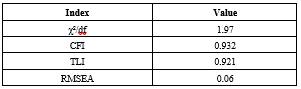
CFA results demonstrated a good fit of the model to the data, with the following fit indices (Table 3). Although the CFI and TLI are slightly below the ideal 0.95 threshold, they remain within the acceptable range for complex models, indicating good model fit. The RMSEA of 0.06 is considered acceptable, with values closer to 0.05 regarded as excellent. The 90% confidence interval for RMSEA ranges from 0.054 to 0.065, further supporting the adequacy of the model fit. These indices, along with the χ²/df ratio of 1.97 and a chi-square p-value of <0.001, demonstrate that the model fits the data adequately. This model fit indicates strong construct validity of the instrument. The Parsimony-Adjusted Fit Indices for the model are as follows: PRATIO = 0.864, PNFI = 0.753, and PCFI = 0.805. These values suggest a good model fit, considering the balance between model complexity and data explanation. The results indicate that the model provides a satisfactory explanation of the data while maintaining an acceptable level of parsimony.
Table 3.CFA fit indices for MTM constructs

Full-Text: (112 Views)
Introduction
Recent studies indicate a declining total fertility rate (TFR) in many countries including Iran (1,2). A 2024 study suggests that in Tehran province, one of the most populous regions in Iran, the TFR may drop from 1.4 births per woman in 2019 to about 1.06 by 2029 under current socio-economic conditions, with only a slight potential increase to 1.10 under optimistic scenarios (3). Consequently, Iran’s natural population growth is expected to approach zero between 2045 and 2050 and become negative thereafter. This trend highlights significant demographic challenges associated with sustained low fertility (4). National statistics further indicate a rising tendency toward single-child families. This in turn accelerates fertility decline, and disrupts the population age structure, which may exacerbate population aging and impose substantial economic and social consequences (5). Globally, it has been suggested that by 2100, only six countries will maintain a fertility rate above the replacement level. These countries are all located in sub-Saharan Africa-a fact that illustrates the widespread nature of the demographic transition (6). Key contributors to this trend include birth control policies, reduced economic and social benefits of larger families, and economic pressures related to inflation, all of which have led to delayed marriage and challenges in family formation (7).
Multiple factors influence childbearing intentions. An individual’s attitude toward childbearing reflects their subjective evaluation of its outcomes, which plays a critical role in whether to pursue it (8). Promoting positive attitudes in this domain requires interventions tailored to community needs and grounded in validated theoretical frameworks (9). Behavioral change models have proven effective in encouraging couples toward childbearing and responsible parenting (10).
The Multi-Theory Model (MTM) integrates cognitive, volitional, and environmental factors to explain the initiation and maintenance of health behaviors. The initiation phase includes participatory dialogue, behavioral confidence, and changes in the physical environment, while the maintenance phase addresses emotional transformation, practice for change, and changes in the social environment. Each construct functions independently and is evidence-based, making MTM a practical framework for designing health interventions (11).
Given the increasing volume of health research, the use of standardized instruments to measure intervention-related variables is essential. Instruments with established validity and reliability are critical for ensuring scientific rigor (12,13). Traditionally, three types of validity-content, criterion, and construct-are considered when evaluating measurement tools (14). Developing appropriate instruments requires comprehensive studies that incorporate both qualitative and quantitative methods and are grounded in the experiences of the target population. MTM-based scales should be pilot-tested for psychometric properties before their implementation in primary research (15). In Iran, several studies have evaluated the instruments related to fertility intentions and associated factors. Specifically, a study for the Persian version of the Screen IVF tool among infertile couples demonstrated that the instrument possessed strong construct and clinical validity, with confirmatory factor analysis and structural equation modeling showing good fit with the data. Moreover, a Cronbach’s alpha close to 0.90 indicated high reliability of the tool (16). International studies have also shown that the psychometric properties of fertility intention instruments may vary across different populations. For example, a study in China assessed the psychometrics of the Fertility Intention Scale (FIS) among breast cancer patients and found that FIS scores had a weak negative correlation with post-cancer fertility concern measures, indicating poor convergent validity of the instrument (17). Overall, although many instruments have been used to assess fertility intentions, MTM‑based instruments offer stronger theoretical coherence and superior psychometric performance, particularly in predicting and explaining fertility‑related behaviors (18,19). They also provide broader conceptual coverage and acceptable reliability, making them suitable for educational interventions and future reproductive health research.
Based on our review of the existing literature, no theory-driven, comprehensive, and psychometrically validated instrument has been developed to operationalize the constructs of the MTM in the context of childbearing intentions. Although fertility-related studies have examined various psychological, social, and demographic determinants, existing measures have generally lacked a clear theoretical foundation, have been limited to selected constructs, or have failed to simultaneously assess both the initiation and sustenance components of behavioral intention. This indicates a significant theoretical and methodological gap in reproductive health research. Therefore, the present study aimed to systematically develop and validate an MTM-based instrument specifically designed to assess both the initiation and continuation of childbearing intentions among women of reproductive age. By translating the full spectrum of MTM constructs into measurable dimensions within the fertility decision-making context, this study introduces a novel theoretical measurement framework and provide a foundation for future theory-guided research and intervention development in reproductive health.
Methods
This cross-sectional descriptive survey aimed to develop and evaluate the psychometric properties of the ‘Childbearing Intention Questionnaire Based on the MTM among women of reproductive age in Yazd, Iran, from April to July 2025. The psychometric assessment included face, content, and construct validity, as well as internal consistency and test–retest reliability. Both qualitative and quantitative approaches were used, with input from experts and participants from the target population
Participants and sampling
Eligible participants were reproductive-aged women who were in their first marriage, had one child aged at least 18 months, were in an active marital relationship, and provided consent to participate. Women were excluded if they were illiterate or had medical contraindications to pregnancy (e.g., Class IV heart disease, use of teratogenic medications, or malignancies).
Participants were recruited from four comprehensive health centers in Yazd, Iran, which were selected using cluster sampling based on comparable socioeconomic characteristics.
Eligible women were identified through the Integrated Health System (SIB) and contacted by telephone.
They received a detailed explanation of the study objectives and a link to the questionnaire with informed consent via an authorized internal messaging platform.
To minimize missing responses, the online questionnaire required participants to answer each item before proceeding to the next one.
This design ensured that no item was skipped, and all participants provided complete responses.
As a result, the dataset contained no missing values, and all analyses were conducted using complete responses without imputation.
Research instrument
After completing the qualitative study, all interviews were transcribed and segmented into meaning units which reflected participants’ perceptions, attitudes, and experiences. These units formed the basis for open coding and identification of MTM constructs. Through iterative comparison and integration, codes were reduced to 204 while preserving the original concepts. The final codes were reviewed by the research team and subject-matter experts and were then organized into 27 subclasses and six main categories. In total, 37 items were developed across six constructs and two behavioral constructs initiation and sustaining behavior, -with the following distribution: -participatory dialogue [8 questions], behavioral confidence [6], physical environment changes [4], emotional transformation [5], practice for change [3], and social environment changes [4], rated on a five-point Likert scale. Two additional constructs-behavior initiation [4] and behavior maintenance [3]-were rated on a three-point Likert scale from “very likely” to “very unlikely.”
Face validity
Qualitative face validity
Qualitative face validity was assessed through in-person interviews with five women from the target population recruited from the same health centers used in the main study. These participants were not included in the final validation study.
Participants were asked to comment on the clarity, relevance, and possible ambiguity of the questionnaire items.
The questionnaire was revised based on their feedback. (20-22).
Quantitative face validity
In this stage, the questionnaire was sent to 10 experts in health education and health promotion, who evaluated unclear or inappropriate items and rated the importance of each item using the item impact score. Experts rated each item on a 5-point Likert scale. Items with an impact score >1.5 were retained for further analysis. This process helped ensure the clarity and relevance of items before the content validity assessment (23).
Content validity
Qualitative content validity
The preliminary version of the questionnaire was distributed via email to 12 experts in health education and health promotion, demography, reproductive health, psychology, along with selected representatives of the target female population. They were asked to provide their suggested revisions for each item. Their feedback primarily focused on the clarity of wording, appropriateness of terminology, sentence structure, and grammatical accuracy. Items identified as having linguistic or conceptual deficiencies were subsequently revised according to the experts’ recommendations.
Quantitative content validity
The questionnaire was emailed to 12 experts in health education and health promotion, demography, reproductive health, and psychology. They were asked to assess the necessity of each item using three levels: essential, useful but not essential, and not necessary.
Each item was evaluated for simplicity, clarity, relevance, and comprehensibility to ensure that it adequately measured the intended construct.
Experts rated each item on these criteria using a 4-point Likert scale (1 = not relevant, 2 = somewhat relevant, 3 = relevant, 4 = highly relevant). For calculating the Content Validity Index (CVI), ratings of 3 and 4 were considered indicative of acceptable content validity.
The Content Validity Ratio (CVR) was calculated based on Lawshe’s method, in which experts classified each item using a three-point scale (Essential, useful but not essential, not essential). Only items rated as “essential” were included in the CVR formula. Items with CVI values between 70% and 79% were revised according to expert feedback, whereas items that did not meet the minimum acceptable CVR and CVI thresholds were eliminated (24).
Construct validity
Construct validity was assessed using confirmatory factor analysis (CFA), which examined the fit of the theoretical model and the relationships between items and their corresponding constructs (25).
Although various recommendations exist regarding sample size determination, this study followed the commonly used rule of thumb in psychometric research, which suggests recruiting 5-10 participants per item (23). Given the 37-item structure of the instrument, the recommended sample size ranged from 185 to 370 participants. To ensure adequate statistical power and stable parameter estimation for CFA, while staying within the recommended range, a sample of 275 women with only one child (Approximately 7.4 participants per item) was recruited.
The sample size was determined according to the commonly recommended guideline of 5-10 participants per item for psychometric studies.
Therefore, a total of 275 participants were recruited for this study, which falls within the recommended range and is considered sufficient for the CFA model.
Participants were selected through visits to designated comprehensive health centers, and eligible women were identified from the SIB system using a systematic random sampling method. Women who declined to participate were not enrolled in the study. After a telephone contact to explain the study objectives, clarify questions, and obtain informed consent, an online link to the questionnaire along with the written informed consent form, was sent via an approved internal messaging platform. The questionnaire was self-administered by the participants.
Construct validity was evaluated using CFA, with model fit assessed through multiple indices: the Comparative Fit Index (CFI), Tucker-Lewis Index (TLI), Root Mean Square Error of Approximation (RMSEA), and the Chi-square/df ratio. Fit criteria were defined as CFI and TLI values close to 0.95 and RMSEA < 0.08 (26).
Exploratory factor analysis (EFA) was not performed, as the questionnaire was developed based on predefined constructs of the MTM. Since the questionnaire was developed based on the predefined constructs of the MTM, EFA was not considered necessary for this study. Instead, the focus was on confirming the factor structure using CFA. With 275 participants, the sample size was considered adequate for CFA, in accordance with psychometric guidelines for CFA sample sizes.
Reliability of the instrument
Reliability was evaluated using internal consistency and test–retest reliability. (27).
Internal consistency
Internal consistency was evaluated using Cronbach’s alpha, with a coefficient of ≥0.70 considered acceptable (28). The alpha coefficient was calculated both for the entire instrument and separately for each subscale, based on responses from 30 participants from the target female population.
Test-retest reliability
Stability over time was assessed using test–retest reliability, calculated with the two-way mixed-effects, absolute agreement Intraclass Correlation Coefficient (ICC), interpreted as follows: <0.40 (Poor), 0.40-0.59 (Fair), 0.60-0.74 (Good), and 0.75-1.00 (Excellent) (23,29).
To evaluate this reliability, 30 participants were randomly selected from the main sample to complete the questionnaire a second time, two weeks after the initial administration (23,30). This sample size was considered appropriate for test-retest analysis in the context of this psychometric validation. While a larger sample size would generally provide more stable estimates of the Intraclass Correlation Coefficient (ICC), the current sample size of 30 participants was sufficient for assessing the stability of the instrument over time. The two-week interval was chosen to minimize recall bias and ensure the responses did not undergo significant changes.
Data analysis
In this study, the Confirmatory Factor Analysis (CFA) approach was used. CFA is applied to test a model that specifies, based on theory, the relationships between the items and the hypothesized constructs (23).
Data analyses included descriptive statistics (Mean, standard deviation) and frequencies (%) to summarize participants’ demographic characteristics. All analyses were conducted using SPSS version 22 (SPSS, Inc., Chicago, IL, USA) and AMOS 21. Internal consistency of the questionnaire and its subscales was assessed using Cronbach’s alpha.
A significance level of p<0.05 was considered for all statistical tests. Psychometric evaluation of the instrument was conducted over a four-month period, from April to July 2025.
Results
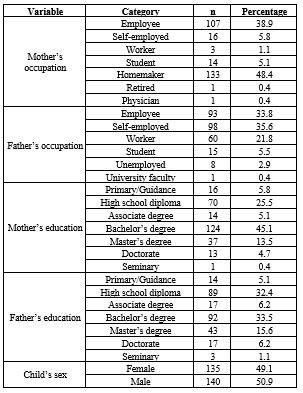
Descriptive analyses showed that the mean ages were 34.4 ± 7.5 years and that of fathers was 38.7 ± 7.9 years. Most mothers were homemakers, and a substantial proportion held a bachelor’s degree. The distribution of children’s sex was almost equal. These demographic characteristics are summarized in Table 1.
Table 1. Demographic characteristics of the studied women with only one child (n = 275)
Recent studies indicate a declining total fertility rate (TFR) in many countries including Iran (1,2). A 2024 study suggests that in Tehran province, one of the most populous regions in Iran, the TFR may drop from 1.4 births per woman in 2019 to about 1.06 by 2029 under current socio-economic conditions, with only a slight potential increase to 1.10 under optimistic scenarios (3). Consequently, Iran’s natural population growth is expected to approach zero between 2045 and 2050 and become negative thereafter. This trend highlights significant demographic challenges associated with sustained low fertility (4). National statistics further indicate a rising tendency toward single-child families. This in turn accelerates fertility decline, and disrupts the population age structure, which may exacerbate population aging and impose substantial economic and social consequences (5). Globally, it has been suggested that by 2100, only six countries will maintain a fertility rate above the replacement level. These countries are all located in sub-Saharan Africa-a fact that illustrates the widespread nature of the demographic transition (6). Key contributors to this trend include birth control policies, reduced economic and social benefits of larger families, and economic pressures related to inflation, all of which have led to delayed marriage and challenges in family formation (7).
Multiple factors influence childbearing intentions. An individual’s attitude toward childbearing reflects their subjective evaluation of its outcomes, which plays a critical role in whether to pursue it (8). Promoting positive attitudes in this domain requires interventions tailored to community needs and grounded in validated theoretical frameworks (9). Behavioral change models have proven effective in encouraging couples toward childbearing and responsible parenting (10).
The Multi-Theory Model (MTM) integrates cognitive, volitional, and environmental factors to explain the initiation and maintenance of health behaviors. The initiation phase includes participatory dialogue, behavioral confidence, and changes in the physical environment, while the maintenance phase addresses emotional transformation, practice for change, and changes in the social environment. Each construct functions independently and is evidence-based, making MTM a practical framework for designing health interventions (11).
Given the increasing volume of health research, the use of standardized instruments to measure intervention-related variables is essential. Instruments with established validity and reliability are critical for ensuring scientific rigor (12,13). Traditionally, three types of validity-content, criterion, and construct-are considered when evaluating measurement tools (14). Developing appropriate instruments requires comprehensive studies that incorporate both qualitative and quantitative methods and are grounded in the experiences of the target population. MTM-based scales should be pilot-tested for psychometric properties before their implementation in primary research (15). In Iran, several studies have evaluated the instruments related to fertility intentions and associated factors. Specifically, a study for the Persian version of the Screen IVF tool among infertile couples demonstrated that the instrument possessed strong construct and clinical validity, with confirmatory factor analysis and structural equation modeling showing good fit with the data. Moreover, a Cronbach’s alpha close to 0.90 indicated high reliability of the tool (16). International studies have also shown that the psychometric properties of fertility intention instruments may vary across different populations. For example, a study in China assessed the psychometrics of the Fertility Intention Scale (FIS) among breast cancer patients and found that FIS scores had a weak negative correlation with post-cancer fertility concern measures, indicating poor convergent validity of the instrument (17). Overall, although many instruments have been used to assess fertility intentions, MTM‑based instruments offer stronger theoretical coherence and superior psychometric performance, particularly in predicting and explaining fertility‑related behaviors (18,19). They also provide broader conceptual coverage and acceptable reliability, making them suitable for educational interventions and future reproductive health research.
Based on our review of the existing literature, no theory-driven, comprehensive, and psychometrically validated instrument has been developed to operationalize the constructs of the MTM in the context of childbearing intentions. Although fertility-related studies have examined various psychological, social, and demographic determinants, existing measures have generally lacked a clear theoretical foundation, have been limited to selected constructs, or have failed to simultaneously assess both the initiation and sustenance components of behavioral intention. This indicates a significant theoretical and methodological gap in reproductive health research. Therefore, the present study aimed to systematically develop and validate an MTM-based instrument specifically designed to assess both the initiation and continuation of childbearing intentions among women of reproductive age. By translating the full spectrum of MTM constructs into measurable dimensions within the fertility decision-making context, this study introduces a novel theoretical measurement framework and provide a foundation for future theory-guided research and intervention development in reproductive health.
Methods
This cross-sectional descriptive survey aimed to develop and evaluate the psychometric properties of the ‘Childbearing Intention Questionnaire Based on the MTM among women of reproductive age in Yazd, Iran, from April to July 2025. The psychometric assessment included face, content, and construct validity, as well as internal consistency and test–retest reliability. Both qualitative and quantitative approaches were used, with input from experts and participants from the target population
Participants and sampling
Eligible participants were reproductive-aged women who were in their first marriage, had one child aged at least 18 months, were in an active marital relationship, and provided consent to participate. Women were excluded if they were illiterate or had medical contraindications to pregnancy (e.g., Class IV heart disease, use of teratogenic medications, or malignancies).
Participants were recruited from four comprehensive health centers in Yazd, Iran, which were selected using cluster sampling based on comparable socioeconomic characteristics.
Eligible women were identified through the Integrated Health System (SIB) and contacted by telephone.
They received a detailed explanation of the study objectives and a link to the questionnaire with informed consent via an authorized internal messaging platform.
To minimize missing responses, the online questionnaire required participants to answer each item before proceeding to the next one.
This design ensured that no item was skipped, and all participants provided complete responses.
As a result, the dataset contained no missing values, and all analyses were conducted using complete responses without imputation.
Research instrument
After completing the qualitative study, all interviews were transcribed and segmented into meaning units which reflected participants’ perceptions, attitudes, and experiences. These units formed the basis for open coding and identification of MTM constructs. Through iterative comparison and integration, codes were reduced to 204 while preserving the original concepts. The final codes were reviewed by the research team and subject-matter experts and were then organized into 27 subclasses and six main categories. In total, 37 items were developed across six constructs and two behavioral constructs initiation and sustaining behavior, -with the following distribution: -participatory dialogue [8 questions], behavioral confidence [6], physical environment changes [4], emotional transformation [5], practice for change [3], and social environment changes [4], rated on a five-point Likert scale. Two additional constructs-behavior initiation [4] and behavior maintenance [3]-were rated on a three-point Likert scale from “very likely” to “very unlikely.”
Face validity
Qualitative face validity
Qualitative face validity was assessed through in-person interviews with five women from the target population recruited from the same health centers used in the main study. These participants were not included in the final validation study.
Participants were asked to comment on the clarity, relevance, and possible ambiguity of the questionnaire items.
The questionnaire was revised based on their feedback. (20-22).
Quantitative face validity
In this stage, the questionnaire was sent to 10 experts in health education and health promotion, who evaluated unclear or inappropriate items and rated the importance of each item using the item impact score. Experts rated each item on a 5-point Likert scale. Items with an impact score >1.5 were retained for further analysis. This process helped ensure the clarity and relevance of items before the content validity assessment (23).
Content validity
Qualitative content validity
The preliminary version of the questionnaire was distributed via email to 12 experts in health education and health promotion, demography, reproductive health, psychology, along with selected representatives of the target female population. They were asked to provide their suggested revisions for each item. Their feedback primarily focused on the clarity of wording, appropriateness of terminology, sentence structure, and grammatical accuracy. Items identified as having linguistic or conceptual deficiencies were subsequently revised according to the experts’ recommendations.
Quantitative content validity
The questionnaire was emailed to 12 experts in health education and health promotion, demography, reproductive health, and psychology. They were asked to assess the necessity of each item using three levels: essential, useful but not essential, and not necessary.
Each item was evaluated for simplicity, clarity, relevance, and comprehensibility to ensure that it adequately measured the intended construct.
Experts rated each item on these criteria using a 4-point Likert scale (1 = not relevant, 2 = somewhat relevant, 3 = relevant, 4 = highly relevant). For calculating the Content Validity Index (CVI), ratings of 3 and 4 were considered indicative of acceptable content validity.
The Content Validity Ratio (CVR) was calculated based on Lawshe’s method, in which experts classified each item using a three-point scale (Essential, useful but not essential, not essential). Only items rated as “essential” were included in the CVR formula. Items with CVI values between 70% and 79% were revised according to expert feedback, whereas items that did not meet the minimum acceptable CVR and CVI thresholds were eliminated (24).
Construct validity
Construct validity was assessed using confirmatory factor analysis (CFA), which examined the fit of the theoretical model and the relationships between items and their corresponding constructs (25).
Although various recommendations exist regarding sample size determination, this study followed the commonly used rule of thumb in psychometric research, which suggests recruiting 5-10 participants per item (23). Given the 37-item structure of the instrument, the recommended sample size ranged from 185 to 370 participants. To ensure adequate statistical power and stable parameter estimation for CFA, while staying within the recommended range, a sample of 275 women with only one child (Approximately 7.4 participants per item) was recruited.
The sample size was determined according to the commonly recommended guideline of 5-10 participants per item for psychometric studies.
Therefore, a total of 275 participants were recruited for this study, which falls within the recommended range and is considered sufficient for the CFA model.
Participants were selected through visits to designated comprehensive health centers, and eligible women were identified from the SIB system using a systematic random sampling method. Women who declined to participate were not enrolled in the study. After a telephone contact to explain the study objectives, clarify questions, and obtain informed consent, an online link to the questionnaire along with the written informed consent form, was sent via an approved internal messaging platform. The questionnaire was self-administered by the participants.
Construct validity was evaluated using CFA, with model fit assessed through multiple indices: the Comparative Fit Index (CFI), Tucker-Lewis Index (TLI), Root Mean Square Error of Approximation (RMSEA), and the Chi-square/df ratio. Fit criteria were defined as CFI and TLI values close to 0.95 and RMSEA < 0.08 (26).
Exploratory factor analysis (EFA) was not performed, as the questionnaire was developed based on predefined constructs of the MTM. Since the questionnaire was developed based on the predefined constructs of the MTM, EFA was not considered necessary for this study. Instead, the focus was on confirming the factor structure using CFA. With 275 participants, the sample size was considered adequate for CFA, in accordance with psychometric guidelines for CFA sample sizes.
Reliability of the instrument
Reliability was evaluated using internal consistency and test–retest reliability. (27).
Internal consistency
Internal consistency was evaluated using Cronbach’s alpha, with a coefficient of ≥0.70 considered acceptable (28). The alpha coefficient was calculated both for the entire instrument and separately for each subscale, based on responses from 30 participants from the target female population.
Test-retest reliability
Stability over time was assessed using test–retest reliability, calculated with the two-way mixed-effects, absolute agreement Intraclass Correlation Coefficient (ICC), interpreted as follows: <0.40 (Poor), 0.40-0.59 (Fair), 0.60-0.74 (Good), and 0.75-1.00 (Excellent) (23,29).
To evaluate this reliability, 30 participants were randomly selected from the main sample to complete the questionnaire a second time, two weeks after the initial administration (23,30). This sample size was considered appropriate for test-retest analysis in the context of this psychometric validation. While a larger sample size would generally provide more stable estimates of the Intraclass Correlation Coefficient (ICC), the current sample size of 30 participants was sufficient for assessing the stability of the instrument over time. The two-week interval was chosen to minimize recall bias and ensure the responses did not undergo significant changes.
Data analysis
In this study, the Confirmatory Factor Analysis (CFA) approach was used. CFA is applied to test a model that specifies, based on theory, the relationships between the items and the hypothesized constructs (23).
Data analyses included descriptive statistics (Mean, standard deviation) and frequencies (%) to summarize participants’ demographic characteristics. All analyses were conducted using SPSS version 22 (SPSS, Inc., Chicago, IL, USA) and AMOS 21. Internal consistency of the questionnaire and its subscales was assessed using Cronbach’s alpha.
A significance level of p<0.05 was considered for all statistical tests. Psychometric evaluation of the instrument was conducted over a four-month period, from April to July 2025.
Results
Descriptive analyses showed that the mean ages were 34.4 ± 7.5 years and that of fathers was 38.7 ± 7.9 years. Most mothers were homemakers, and a substantial proportion held a bachelor’s degree. The distribution of children’s sex was almost equal. These demographic characteristics are summarized in Table 1.
Table 1. Demographic characteristics of the studied women with only one child (n = 275)
Normality tests (Kolmogorov–Smirnov and Shapiro–Wilk) indicated that mother’s income, spouse’s income, and child’s age were not normally distributed (p < 0.001). Accordingly, these variables are presented as medians and interquartile ranges (IQR) in Table 2.
Table 2. Median and interquartile range of income and child’s age
Quantitative face validity
All items achieved an Impact Score greater than1.5 and were therefore retained for subsequent psychometric analyses.
Content validity
In the quantitative content validity assessment, four items were removed: two because of low CVR values and two because of conceptual overlap confirmed by expert review and team consensus. Following the calculation of the Content Validity Index (CVI), two items with scores between 70% and 79% were revised based on expert recommendations and subsequently approved. Items failing to meet both CVR and CVI criteria were removed. Ultimately, 33 items were retained, with an overall CVI of 0.91 and a scale-level S-CVI/Ave of 0.929, indicating good content validity and confirming the instrument’s credibility (Please refer to the attached files: Table S, S-1, S-2, S-3, S-4, S-5, S-6, S-7).
Construct validity
CFA was conducted using Maximum Likelihood estimation in AMOS. Due to the ordinal nature of items, Bollen–Stine bootstrapping was applied to account for potential deviations from multivariate normality.
CFA results demonstrated a good fit of the model to the data, with the following fit indices (Table 3). Although the CFI and TLI are slightly below the ideal 0.95 threshold, they remain within the acceptable range for complex models, indicating good model fit. The RMSEA of 0.06 is considered acceptable, with values closer to 0.05 regarded as excellent. The 90% confidence interval for RMSEA ranges from 0.054 to 0.065, further supporting the adequacy of the model fit. These indices, along with the χ²/df ratio of 1.97 and a chi-square p-value of <0.001, demonstrate that the model fits the data adequately. This model fit indicates strong construct validity of the instrument. The Parsimony-Adjusted Fit Indices for the model are as follows: PRATIO = 0.864, PNFI = 0.753, and PCFI = 0.805. These values suggest a good model fit, considering the balance between model complexity and data explanation. The results indicate that the model provides a satisfactory explanation of the data while maintaining an acceptable level of parsimony.
Table 3.CFA fit indices for MTM constructs
Reliability
Cronbach’s alpha coefficients for the MTM-based Childbearing Intention Questionnaire subscales ranged from 0.71 to 0.92, demonstrating acceptable to excellent internal consistency.
The “Behavioral Confidence” subscale had the highest reliability (α = 0.92), while the “Perceived Disadvantages of Participatory Dialogue” subscale had the lowest (α = 0.71), still within the acceptable range. The overall questionnaire demonstrated very high internal consistency with α = 0.93 (Table 4).
The stability of the instrument over time was also excellent, with an Intraclass Correlation Coefficient (ICC) of 0.81 (95% CI: 0.68-0.90).
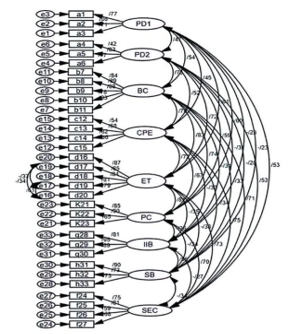
Furthermore, based on the final CFA results, all items showed acceptable loadings on their respective latent constructs, supporting the construct validity of the questionnaire (Figure 1).
Table 4. MTM constructs and questionnaire reliability
Cronbach’s alpha coefficients for the MTM-based Childbearing Intention Questionnaire subscales ranged from 0.71 to 0.92, demonstrating acceptable to excellent internal consistency.
The “Behavioral Confidence” subscale had the highest reliability (α = 0.92), while the “Perceived Disadvantages of Participatory Dialogue” subscale had the lowest (α = 0.71), still within the acceptable range. The overall questionnaire demonstrated very high internal consistency with α = 0.93 (Table 4).
The stability of the instrument over time was also excellent, with an Intraclass Correlation Coefficient (ICC) of 0.81 (95% CI: 0.68-0.90).
Furthermore, based on the final CFA results, all items showed acceptable loadings on their respective latent constructs, supporting the construct validity of the questionnaire (Figure 1).
Table 4. MTM constructs and questionnaire reliability
Figure 1. Results of the CFA for the 33-item MTM-based childbearing intention questionnaire
Abbreviations: PD1: Participatory Dialogue (Advantages); PD2: Participatory Dialogue (Disadvantages); BC: Behavioral Confidence; CPE: Changes in the Physical Environment; ET: Emotional Transformation; PC: Practice for Change; IIB: Intention to Initiate Behavior; SB: Intention to Sustain Behavior; SEC: Changes in the Social Environment.
After establishing the validity and reliability of the instrument, the researcher-made questionnaire was designed based on the MTM and consisted of two parts: the first part of the questionnaire included demographic items, and the second part included 33 items across six main constructs and two behavioral constructs, initiation of behavior and sustaining behavior.
Participatory dialogue: consisted of six questions: three addressing the advantages of childbearing (e.g., “My children will become independent in their activities”) and three addressing the disadvantages (e.g., “It will probably be difficult to meet the different age-related needs of each child”). Responses were rated on a five-point Likert scale from strongly disagree (1) to strongly agree (5), with items 4-6 reverse-scored. The total score ranged from 6 to 30, with higher scores reflecting a more positive attitude toward childbearing. The construct’s score was calculated as the difference between perceived advantages and disadvantages.
Behavioral confidence: Included 5 questions (e.g., “I am confident that, despite being busy, I can have more than one child”) scored on a five-point Likert scale (1 = strongly disagree to 5 = strongly agree), with a total score of 5-25. Higher scores reflected greater confidence in childbearing.
Changes in the physical environment: Included 4 questions (e.g., “To have more than one child, I am confident that I can access obstetric and maternal care services in comprehensive health centers”) scored 4–20 on a five-point Likert scale. Higher scores indicated better physical accessibility for childbearing.
Emotional transformation: Included 5 questions (e.g., “I can overcome my doubts about having more than one child because I believe more children will prevent loneliness in old age”) scored 5-25. Higher scores indicated greater emotional readiness for childbearing.
Practice for change: Included 3 questions (e.g., “To have more than one child, I can overcome laziness and lack of motivation”), scored 3-15. Higher scores reflected more active efforts to change childbearing behavior.
Changes in the social environment: Included 4 questions (e.g., “I can have more than one child because I have my spouse’s support”), scored 4-20. Higher scores indicated stronger social support.
Likelihood of initiating and maintaining behavior: Each included 3 questions, rated on a three-point Likert scale (1 = not at all likely, 3 = very likely), with scores ranging from 3-9. Higher scores indicated a stronger likelihood to initiate and sustain behavior.
Scoring: The total score of the questionnaire was obtained by summing the scores of all 33 items across the seven constructs, yielding a possible range of 33–153. Higher scores indicate a stronger intention toward childbearing behavior. The total score was analyzed as a continuous variable, and no categorical cut-off was defined, as the instrument was not intended for diagnostic classification.
Discussion
This study aimed to develop and psychometrically evaluate an MTM-based questionnaire for assessing childbearing intention among women with one child and to examine its validity and reliability.
The findings indicate that the MTM-based questionnaire is a robust and suitable instrument for assessing childbearing intention among women with one child.
Focusing on women with only one child, the findings should be interpreted in the context of contemporary social, economic, and cultural changes. Most participants had university-level education and/or formal employment, reflecting trends of delayed childbearing, declining fertility rates, and an increasing preference for single-child families in urban areas (31). Approximately 20% of Iranian families have only one child. This tendency may be influenced by modern lifestyles, maternal employment, economic concerns, and growing emphasis on child-rearing quality (32). These families exhibit unique social, psychological, and educational needs, which should be integrated into population policies.
The results suggest that population policies aimed solely at increasing child numbers may not fully address the complex cultural and economic realities of educated families. Integrated strategies, including employment incentives, educational support, and flexible workplace policies for mothers, and enhanced child welfare, are likely to be more effective. Gender distribution of the first child was roughly equal, consistent with prior Iranian studies showing no strong preference for first-child gender (33).
The ages of the parents and child suggest that most families were in the middle stage of the family life cycle, which is a critical period for decisions regarding additional children.
Despite this, many families maintained a single-child structure, likely reflecting the influence of economic, social, and cultural factors.
Regarding psychometric properties, CFA provided strong evidence of both convergent and discriminant validity. The overall Cronbach’s alpha of 0.93 indicated excellent internal consistency, consistent with similar Iranian instruments such as the Fertility Desires Scale (FDS), which reported alphas of 0.83-0.92 (34). Fit indices from CFA further confirmed the appropriateness of the MTM-based conceptual framework (35).
The fit indices were comparable to or slightly stronger than those reported in previous validation studies. For instance, a study in China among breast cancer patients reported slightly higher CFI and TLI values but higher RMSEA and χ²/df, likely due to population or instrument differences (17). Overall, our model demonstrated more balanced fit indices, suggesting stronger structural stability in a general population sample.
Compared to the ISI-F developed by Taebi et al. (2022), the current 33-item questionnaire demonstrated broader conceptual coverage and higher reliability (α = 0.93 vs. 0.909; ICC = 0.878), indicating strong measurement stability and conceptual comprehensiveness (36).
An interactive coping tool for couples facing infertility reported very high reliability (α = 0.98) and satisfactory CFA indices (37). Although the reliability of the interactive coping tool was higher (α = 0.98), such extremely high values may indicate item redundancy, whereas the present questionnaire achieved a strong balance between reliability and conceptual comprehensiveness for general population use.
In Portugal, the translated Fertility Adjustment Scale showed a two-factor structure (α = 0.82), whereas the present instrument supported a multidimensional MTM-based framework, offering a more comprehensive assessment of determinants (38).
International validation studies in Japan and China further support the applicability of MTM-based approaches while highlighting key psychometric differences. In Japan, a study among female nurses reported CFA indices of CFI > 0.95, RMSEA < 0.07, and Cronbach’s alpha ranging from 0.59 to 0.80 across factors (39). While most scales fit adequately, social and unit-level factors showed lower reliability than the present MTM-based questionnaire (α = 0.93; ICC = 0.81; CFI = 0.932; RMSEA = 0.06), indicating stronger structural stability and theoretical cohesion in our instrument. In China, the Childbearing Questionnaire (CBQ-C) showed a two-factor structure and high reliability (α = 0.944) (40), but primarily assessed positive and negative fertility motivations. In contrast, the MTM-based instrument captures both motivation and behavioral change processes, which provided broader conceptual coverage and a multidimensional, theory-driven framework suitable for predictive and intervention-focused research.
Overall, compared with existing validated instruments, the present questionnaire demonstrated comparable or superior reliability and a theoretically grounded multidimensional structure, allowing multidimensional assessment of factors influencing fertility decisions. Its robust construct validity and high internal consistency (α=0.93) indicated that it is suitable for both research and policy applications, including educational interventions and public health planning.
The findings of this phase indicate that a carefully designed MTM-based childbearing instrument with broad conceptual coverage can provide a multidimensional assessment of factors influencing childbearing intention.
Taken together, the internal evidence and psychometric results show that the tool is valid, reliable, and appropriate for applied research and educational interventions in reproductive health among Iranian women.
This tool can be used by healthcare providers and policymakers to identify women at different stages of readiness for subsequent childbearing and to design targeted interventions-including educational programs, counseling, and workplace support policies-thereby supporting improved family planning and reproductive health outcomes in urban populations.
This study has several notable strengths. First, the childbearing intention questionnaire was developed based on the robust theoretical framework of the MTM, ensuring comprehensive coverage of motivational and behavioral factors. Second, it also demonstrated strong psychometric properties, with high reliability and construct validity comparable to or better than those of similar national and international instruments. Third, it was specifically designed for women with one child, a key population group shaped by contemporary social, economic, and cultural factors. Finally, its validated, theory-driven structure facilitates its use in research, educational interventions, and policy-making, and provides a practical framework for evidence-based reproductive health planning.
A limitation of this study is the use of cluster sampling from four health centers in Yazd, which may limit the generalizability of the findings to other regions of Iran.
Although this approach was selected for feasibility and relative socio-economic homogeneity, future studies should include more geographically and culturally diverse populations.
The sample predominantly comprised highly educated women. While this reflects the characteristics of the population attending the selected health centers, it may limit representativeness. Future research should aim to recruit participants with more diverse educational backgrounds.
Although the questionnaire consists of
Its length may limit routine clinical use, and future studies should consider developing a shorter version for time-constrained settings while preserving its validity and reliability.
Additionally, the study was limited to women with exactly one child, relied on self-reported data, and was conducted within a specific socio-cultural context in Iran. These factors may affect the external validity and generalizability of the findings. Future research is encouraged to include women without children and those with multiple children, which would enhance the applicability of the questionnaire across diverse parity groups and socio-cultural settings.
Conclusion
Based on our review, this study presents the first psychometric evaluation of an MTM-based childbearing intention questionnaire in Iran, demonstrating robust construct validity and excellent reliability. The 33-item instrument provides a comprehensive and reliable tool for assessing the psychological determinants of childbearing intentions and can support educational programs, interventional studies, and evidence-informed reproductive health policy planning. Future research should apply the questionnaire across diverse populations, evaluate its stability over time, and explore its applicability in different cultural and healthcare system contexts.
Acknowledgement
We thereby appreciate all women of reproductive age who participated in this study. This article was extracted from a Ph.D. thesis (Tayebeh Mokhtari Sorkhani) Registration. We want to thank the Vice-Chancellor for Research of Shahid Sadoughi University of Medical Sciences for their support.
Funding Sources
This research was funded by the Vice-Chancellor for Research at Shahid Sadoughi University of Medical Sciences, Yazd, Iran.
Ethical Statement
The present study received approval from the Ethics Committee of Shahid Sadoughi University of Medical Sciences, Yazd, Iran (IR.SSU.SPH.REC.1403.069). Before participation, all individuals provided written informed consent. Furthermore, the research's goals and methodology were explained to participants, and their privacy and anonymity were guaranteed before the interviews were conducted.
Conflicts of Interest
No conflict of interest.
Author Contributions
Conceptualization: T.M.S.; Data curation: M.B. and F.M.; Methodology/Formal analysis/Visualization: T.M.S., and F.M.; Project administration: S.S.M.M.; Writing - Original draft: T.M.S.; Writing - Review and Editing: T.M.S; F.M and M.SH. All authors actively participated in all stages of preparing the manuscript and approved the final version of the manuscript.
Data Availability Statement
Data will be accessible upon reasonable request, pending review by the research team and consideration of data confidentiality.
Use of Artificial Intelligence
No AI tools/services were used during the preparation of this work.
Abbreviations: PD1: Participatory Dialogue (Advantages); PD2: Participatory Dialogue (Disadvantages); BC: Behavioral Confidence; CPE: Changes in the Physical Environment; ET: Emotional Transformation; PC: Practice for Change; IIB: Intention to Initiate Behavior; SB: Intention to Sustain Behavior; SEC: Changes in the Social Environment.
After establishing the validity and reliability of the instrument, the researcher-made questionnaire was designed based on the MTM and consisted of two parts: the first part of the questionnaire included demographic items, and the second part included 33 items across six main constructs and two behavioral constructs, initiation of behavior and sustaining behavior.
Participatory dialogue: consisted of six questions: three addressing the advantages of childbearing (e.g., “My children will become independent in their activities”) and three addressing the disadvantages (e.g., “It will probably be difficult to meet the different age-related needs of each child”). Responses were rated on a five-point Likert scale from strongly disagree (1) to strongly agree (5), with items 4-6 reverse-scored. The total score ranged from 6 to 30, with higher scores reflecting a more positive attitude toward childbearing. The construct’s score was calculated as the difference between perceived advantages and disadvantages.
Behavioral confidence: Included 5 questions (e.g., “I am confident that, despite being busy, I can have more than one child”) scored on a five-point Likert scale (1 = strongly disagree to 5 = strongly agree), with a total score of 5-25. Higher scores reflected greater confidence in childbearing.
Changes in the physical environment: Included 4 questions (e.g., “To have more than one child, I am confident that I can access obstetric and maternal care services in comprehensive health centers”) scored 4–20 on a five-point Likert scale. Higher scores indicated better physical accessibility for childbearing.
Emotional transformation: Included 5 questions (e.g., “I can overcome my doubts about having more than one child because I believe more children will prevent loneliness in old age”) scored 5-25. Higher scores indicated greater emotional readiness for childbearing.
Practice for change: Included 3 questions (e.g., “To have more than one child, I can overcome laziness and lack of motivation”), scored 3-15. Higher scores reflected more active efforts to change childbearing behavior.
Changes in the social environment: Included 4 questions (e.g., “I can have more than one child because I have my spouse’s support”), scored 4-20. Higher scores indicated stronger social support.
Likelihood of initiating and maintaining behavior: Each included 3 questions, rated on a three-point Likert scale (1 = not at all likely, 3 = very likely), with scores ranging from 3-9. Higher scores indicated a stronger likelihood to initiate and sustain behavior.
Scoring: The total score of the questionnaire was obtained by summing the scores of all 33 items across the seven constructs, yielding a possible range of 33–153. Higher scores indicate a stronger intention toward childbearing behavior. The total score was analyzed as a continuous variable, and no categorical cut-off was defined, as the instrument was not intended for diagnostic classification.
Discussion
This study aimed to develop and psychometrically evaluate an MTM-based questionnaire for assessing childbearing intention among women with one child and to examine its validity and reliability.
The findings indicate that the MTM-based questionnaire is a robust and suitable instrument for assessing childbearing intention among women with one child.
Focusing on women with only one child, the findings should be interpreted in the context of contemporary social, economic, and cultural changes. Most participants had university-level education and/or formal employment, reflecting trends of delayed childbearing, declining fertility rates, and an increasing preference for single-child families in urban areas (31). Approximately 20% of Iranian families have only one child. This tendency may be influenced by modern lifestyles, maternal employment, economic concerns, and growing emphasis on child-rearing quality (32). These families exhibit unique social, psychological, and educational needs, which should be integrated into population policies.
The results suggest that population policies aimed solely at increasing child numbers may not fully address the complex cultural and economic realities of educated families. Integrated strategies, including employment incentives, educational support, and flexible workplace policies for mothers, and enhanced child welfare, are likely to be more effective. Gender distribution of the first child was roughly equal, consistent with prior Iranian studies showing no strong preference for first-child gender (33).
The ages of the parents and child suggest that most families were in the middle stage of the family life cycle, which is a critical period for decisions regarding additional children.
Despite this, many families maintained a single-child structure, likely reflecting the influence of economic, social, and cultural factors.
Regarding psychometric properties, CFA provided strong evidence of both convergent and discriminant validity. The overall Cronbach’s alpha of 0.93 indicated excellent internal consistency, consistent with similar Iranian instruments such as the Fertility Desires Scale (FDS), which reported alphas of 0.83-0.92 (34). Fit indices from CFA further confirmed the appropriateness of the MTM-based conceptual framework (35).
The fit indices were comparable to or slightly stronger than those reported in previous validation studies. For instance, a study in China among breast cancer patients reported slightly higher CFI and TLI values but higher RMSEA and χ²/df, likely due to population or instrument differences (17). Overall, our model demonstrated more balanced fit indices, suggesting stronger structural stability in a general population sample.
Compared to the ISI-F developed by Taebi et al. (2022), the current 33-item questionnaire demonstrated broader conceptual coverage and higher reliability (α = 0.93 vs. 0.909; ICC = 0.878), indicating strong measurement stability and conceptual comprehensiveness (36).
An interactive coping tool for couples facing infertility reported very high reliability (α = 0.98) and satisfactory CFA indices (37). Although the reliability of the interactive coping tool was higher (α = 0.98), such extremely high values may indicate item redundancy, whereas the present questionnaire achieved a strong balance between reliability and conceptual comprehensiveness for general population use.
In Portugal, the translated Fertility Adjustment Scale showed a two-factor structure (α = 0.82), whereas the present instrument supported a multidimensional MTM-based framework, offering a more comprehensive assessment of determinants (38).
International validation studies in Japan and China further support the applicability of MTM-based approaches while highlighting key psychometric differences. In Japan, a study among female nurses reported CFA indices of CFI > 0.95, RMSEA < 0.07, and Cronbach’s alpha ranging from 0.59 to 0.80 across factors (39). While most scales fit adequately, social and unit-level factors showed lower reliability than the present MTM-based questionnaire (α = 0.93; ICC = 0.81; CFI = 0.932; RMSEA = 0.06), indicating stronger structural stability and theoretical cohesion in our instrument. In China, the Childbearing Questionnaire (CBQ-C) showed a two-factor structure and high reliability (α = 0.944) (40), but primarily assessed positive and negative fertility motivations. In contrast, the MTM-based instrument captures both motivation and behavioral change processes, which provided broader conceptual coverage and a multidimensional, theory-driven framework suitable for predictive and intervention-focused research.
Overall, compared with existing validated instruments, the present questionnaire demonstrated comparable or superior reliability and a theoretically grounded multidimensional structure, allowing multidimensional assessment of factors influencing fertility decisions. Its robust construct validity and high internal consistency (α=0.93) indicated that it is suitable for both research and policy applications, including educational interventions and public health planning.
The findings of this phase indicate that a carefully designed MTM-based childbearing instrument with broad conceptual coverage can provide a multidimensional assessment of factors influencing childbearing intention.
Taken together, the internal evidence and psychometric results show that the tool is valid, reliable, and appropriate for applied research and educational interventions in reproductive health among Iranian women.
This tool can be used by healthcare providers and policymakers to identify women at different stages of readiness for subsequent childbearing and to design targeted interventions-including educational programs, counseling, and workplace support policies-thereby supporting improved family planning and reproductive health outcomes in urban populations.
This study has several notable strengths. First, the childbearing intention questionnaire was developed based on the robust theoretical framework of the MTM, ensuring comprehensive coverage of motivational and behavioral factors. Second, it also demonstrated strong psychometric properties, with high reliability and construct validity comparable to or better than those of similar national and international instruments. Third, it was specifically designed for women with one child, a key population group shaped by contemporary social, economic, and cultural factors. Finally, its validated, theory-driven structure facilitates its use in research, educational interventions, and policy-making, and provides a practical framework for evidence-based reproductive health planning.
A limitation of this study is the use of cluster sampling from four health centers in Yazd, which may limit the generalizability of the findings to other regions of Iran.
Although this approach was selected for feasibility and relative socio-economic homogeneity, future studies should include more geographically and culturally diverse populations.
The sample predominantly comprised highly educated women. While this reflects the characteristics of the population attending the selected health centers, it may limit representativeness. Future research should aim to recruit participants with more diverse educational backgrounds.
Although the questionnaire consists of
Its length may limit routine clinical use, and future studies should consider developing a shorter version for time-constrained settings while preserving its validity and reliability.
Additionally, the study was limited to women with exactly one child, relied on self-reported data, and was conducted within a specific socio-cultural context in Iran. These factors may affect the external validity and generalizability of the findings. Future research is encouraged to include women without children and those with multiple children, which would enhance the applicability of the questionnaire across diverse parity groups and socio-cultural settings.
Conclusion
Based on our review, this study presents the first psychometric evaluation of an MTM-based childbearing intention questionnaire in Iran, demonstrating robust construct validity and excellent reliability. The 33-item instrument provides a comprehensive and reliable tool for assessing the psychological determinants of childbearing intentions and can support educational programs, interventional studies, and evidence-informed reproductive health policy planning. Future research should apply the questionnaire across diverse populations, evaluate its stability over time, and explore its applicability in different cultural and healthcare system contexts.
Acknowledgement
We thereby appreciate all women of reproductive age who participated in this study. This article was extracted from a Ph.D. thesis (Tayebeh Mokhtari Sorkhani) Registration. We want to thank the Vice-Chancellor for Research of Shahid Sadoughi University of Medical Sciences for their support.
Funding Sources
This research was funded by the Vice-Chancellor for Research at Shahid Sadoughi University of Medical Sciences, Yazd, Iran.
Ethical Statement
The present study received approval from the Ethics Committee of Shahid Sadoughi University of Medical Sciences, Yazd, Iran (IR.SSU.SPH.REC.1403.069). Before participation, all individuals provided written informed consent. Furthermore, the research's goals and methodology were explained to participants, and their privacy and anonymity were guaranteed before the interviews were conducted.
Conflicts of Interest
No conflict of interest.
Author Contributions
Conceptualization: T.M.S.; Data curation: M.B. and F.M.; Methodology/Formal analysis/Visualization: T.M.S., and F.M.; Project administration: S.S.M.M.; Writing - Original draft: T.M.S.; Writing - Review and Editing: T.M.S; F.M and M.SH. All authors actively participated in all stages of preparing the manuscript and approved the final version of the manuscript.
Data Availability Statement
Data will be accessible upon reasonable request, pending review by the research team and consideration of data confidentiality.
Use of Artificial Intelligence
No AI tools/services were used during the preparation of this work.
Type of study: Original Article |
Subject:
Midwifery
References
1. Khani S, Mohammadzade H, Abbasi-Shavazi MJ. The intergenerational comparison of marriage and childbearing ideals with emphasis on background characteristics in Sanandaj district. Social Problems of Iran. 2019;9(2):49-76. [View at Publisher] [Google Scholar]
2. Dong W-H, Wang X, Yuan F, Wang L, Gu T-M, Zhu B-Q, et al. Will a government subsidy increase couples’ further fertility intentions? A real-world study from a large-scale online survey in Eastern China. Human Reproduction Open. 2024;2024(4):hoae055. [View at Publisher] [DOI] [Google Scholar]
3. Esmaeili N, Abbasi-Shavazi MJ. Impact of family policies and economic situation on low fertility in Tehran, Iran: A multi-agent-based modeling. Demographic Research. 2024;51:107-54. [View at Publisher] [Google Scholar]
4. Azarbakhsh H, Dehghani SP. The Future of Iran with a Decrease in the Total Fertility Rate. Arch Iran Med. 2025;28(4):255-6. [View at Publisher] [DOI] [Google Scholar]
5. Hosseini B, Esmaiili M, Farahbakhsh K, Salarifar MH. The pattern of childbearing motivation is based on the lived experiences of families with at least one child. The Women and Families Cultural-Educational. 2023;18(65):45-68. [View at Publisher]
6. Bhattacharjee NV, Schumacher AE, Aali A, Abate YH, Abbasgholizadeh R, Abbasian M, et al. Global fertility in 204 countries and territories, 1950–2021, with forecasts to 2100: a comprehensive demographic analysis for the Global Burden of Disease Study 2021. The lancet. 2024;403(10440):2057-99. [View at Publisher] [Google Scholar]
7. Nejati M, Shakibaei A, Gholami M. Investigating the Relationship between Population Structure and Poverty. Social Welfare. 2023;22(87):35-72. [View at Publisher] [Google Scholar]
8. Alami A, Esmailzade M, Esmaeili R, Matlabi M, Ekrami Noghabi A, Saberi M. Effectiveness of an educational intervention based on the theory of planned behavior on fertility intention of single-child women: A field trial study. Internal Medicine Today. 2020;26(3):212-27. [View at Publisher] [DOI] [Google Scholar]
9. Simbar M, Ramezani Tehrani F, Hashemi Z. Sexual-reproductive health belief model of college students. Iran South Med J. 2004;7(1):70-8. [View at Publisher] [Google Scholar]
10. Dehkordi ZR, Moghaddam EA, Babaeifar S, Shams-Abadi AD, Sourinejad H. The impact of a theory of planned behavior-based training on the behavioral intention of childless couples in Shahrekord. JMDC. 2023;12(3):143-51. [View at Publisher] [DOI]
11. Abbasi Shavazi M, Sharma M, Mokhtari Sorkhani T. Multi-Theory Model (MTM) and change in childbearing behavior: A perspective. J Res Dev Nurs Midw. 2024;21(3):1-2. [View at Publisher] [DOI] [Google Scholar]
12. Cook DA, Beckman TJ. Current concepts in validity and reliability for psychometric instruments: theory and application. Am J Med. 2006;119(2):166.e7-16. [View at Publisher] [DOI] [PMID] [Google Scholar]
13. DeVon HA, Block ME, Moyle‐Wright P, Ernst DM, Hayden SJ, Lazzara DJ, et al. A psychometric toolbox for testing validity and reliability. J Nurs Scholarsh. 2007;39(2):155-64. [View at Publisher] [DOI] [PMID] [Google Scholar]
14. Cook DA, Zendejas B, Hamstra SJ, Hatala R, Brydges R. What counts as validity evidence? Examples and prevalence in a systematic review of simulation-based assessment. Adv Health Sci Educ Theory Pract. 2014;19(2):233-50. [View at Publisher] [DOI] [PMID] [Google Scholar]
15. Ardian N, Afshani SA, Morowatisharifabad MA, Mahmoodabad SSM, Vaezi AA, Refahi SAA, et al. Evaluating reliability of theory of planned behaviour questionnaire for withdrawal of divorce petition. Open Access Maced J Med Sci. 2018;6(8):1512. [View at Publisher] [DOI] [PMID] [Google Scholar]
16. Ghazanfarpour M, Sorkhani TM, Tajadiny L, Zeynivandnezhad F, Ahmadi A, Habibzadeh V, et al. Psychometric and clinical assessment of the Persian-SCREENIVF among infertile couples. Heliyon. 2023;9(12):e22950. [View at Publisher] [DOI] [PMID] [Google Scholar]
17. Zhu F, Liu C, Qi J, Bian Y, Pang L, Lu Q. Psychometric properties of the Fertility Intention Scale among patients with breast cancer of childbearing age in mainland China. Asia Pac J Oncol Nurs. 2022;9(8):100100. [View at Publisher] [DOI] [PMID] [Google Scholar]
18. Moeini B, Erfani A, Barati M, Doosti-Irani A, Hosseini H, Soheylizad M. Development and psychometric properties of an extended theory of planned behavior questionnaire for childbearing intentions and behaviors in Iran. Korean J Fam Med. 2023;44(2):109-16. [View at Publisher] [DOI] [PMID] [Google Scholar]
19. Maroufizadeh S, Ghaheri A, Amini P, Samani RO. Psychometric properties of the fertility quality of life instrument in infertile Iranian women. Int J Fertil Steril. 2017;10(4):371-9. [View at Publisher] [DOI] [PMID] [Google Scholar]
20. Alaska YA, Alqahtani NM, Al Zahrani AK, Alshahri R, Malyani RZ, Alkutbe RB. Evaluating the content and face validity of Arabic-translated Patient Measures of Safety survey PMOS-30. Plos one. 2024;19(6):e0304151. [View at Publisher] [DOI] [PMID] [Google Scholar]
21. Armal A, Mokhtarinia H, Biglarian A, Abdi K. Face and convergent validity of persian version of rapid office strain assessment (ROSA) checklist. jrehab. 2016;16(4):356-65. [View at Publisher] [Google Scholar]
22. Arabi S, Rezaee M, Sahaf R, Rassafiani M, Hosseini H, Mirzakhany N, et al. Validity and reliability of the Persian version of measurement of the quality of life of people with disabilities. pajoohande. 2014;19(2):91-8. [View at Publisher] [Google Scholar]
23. Ebadi A, Sharif Nia H, Zareiyan A, Zarshenas L. Instrument development in health sciences. Tehran: Jame-e-Negar. 2019:282
24. Polit DF, Yang FM. Measurement and the Measurement of Change: A Primer for the Health Professions: Wolters Kluwer; 2016. [View at Publisher] [Google Scholar]
25. Bouih A, Benattabou D, Nadif B, Benhima M, Benfilali I. The Rosenberg Self-Esteem Scale: A Confirmatory Factor Analysis Study. EJPER. 2022;5(2):145-60. [View at Publisher] [DOI] [Google Scholar]
26. Hu Lt, Bentler PM. Cutoff criteria for fit indexes in covariance structure analysis: Conventional criteria versus new alternatives. Structural equation modeling: a multidisciplinary journal. 1999;6(1):1-55. [View at Publisher] [DOI] [Google Scholar]
27. Mokkink LB, Boers M, Van Der Vleuten C, Bouter LM, Alonso J, Patrick DL, et al. COSMIN Risk of Bias tool to assess the quality of studies on reliability or measurement error of outcome measurement instruments: a Delphi study. BMC Med Res Methodol. 2020;20(1):293. [View at Publisher] [DOI] [PMID] [Google Scholar]
28. Avizhgan M, Mirshah Jafari E, Nasr AR, Changiz T. Designing a tool for curriculum leadership development in postgraduate programs. jmed. 2016;11(1):11-26. [View at Publisher] [Google Scholar]
29. Koo TK, Li MY. A guideline of selecting and reporting intraclass correlation coefficients for reliability research. J Chiropr Med. 2016;15(2):155-63. [View at Publisher] [DOI] [PMID] [Google Scholar]
30. Karimi M, Shafiee Motlagh M, Golmohammadi R, Aliabadi M, Farhadian M. Designing and Developing a Questionnaire to Evaluate the Lighting of the Working Environments of Hospitals. Journal of Health. 2023;13(4):590-603. [View at Publisher] [DOI] [Google Scholar]
31. Mills MA, Rindfuss RR, McDonald PF, te Velde ER. Why do people postpone parenthood? Reasons and social policy incentives. Hum Reprod Update. 2011;17(6):848-60. [View at Publisher] [DOI] [PMID] [Google Scholar]
32. Seraj Shirvan F, Moradi M, Latifnejad Ruodsari R. A systematic review of the childbearing needs of single-child couples. BMC Women's Health. 2024;24(1):83. [View at Publisher] [DOI] [PMID] [Google Scholar]
33. Rahmanian V, Rahmanian K, Rahmanian M, Sharifi N. Exploring Gender Preference, Marriage Age, and Family Size Aspirations among Prospective Spouses in Jahrom, Southern Iran. Journal of Health Sciences & Surveillance System. 2024;12(3):294-301. [View at Publisher] [DOI] [Google Scholar]
34. Naghibi SA, Khazaee-Pool M, Moosazadeh M. Psychometric properties of fertility desire scale (FDS) developed for Iranian parents. BMC Public Health. 2019;19(1):1113. [View at Publisher] [DOI] [PMID] [Google Scholar]
35. Hooper D, Coughlan J, Mullen M. Structural Equation Modeling: Guidelines for Determining Model Fit. EJBRM. 2008;6(1):53-60. [View at Publisher]
36. Taebi M, Kariman N, Montazeri A, Alavi Majd H, Jahangirifar M. Development and psychometric properties of Female Infertility Stigma Instrument (ISI-F): A sequential mixed method study. BMC Womens Health. 2022;22(1):557. [View at Publisher] [DOI] [PMID] [Google Scholar]
37. Reisi M, Kazemi A. Design and psychometric evaluation of the collaborative coping with infertility questionnaire in candidate of assisted reproductive techniques. Sci Rep. 2024;14(1):10804. [View at Publisher] [DOI] [PMID] [Google Scholar]
38. Romeiro J, Nogueira P, Caldeira S, editors. Validation of the Portuguese version of the Fertility Adjustment Scale. Healthcare. 2022;10(3):563. [View at Publisher] [DOI] [PMID] [Google Scholar]
39. Abe K, Nitta M, Chiba K, Tsujita S, Takada Y, Sasaki M, et al. Development and validation of scales measuring individual, nursing unit, hospital, and community factors related to fertility intentions of female Japanese hospital nurses. BMC Womens Health. 2025;25(1):82. [View at Publisher] [DOI] [PMID] [Google Scholar]
40. Li J, Zhang K, Jiang X, Chen X, Pan Y, Xie C, et al. Translation and validation of the childbearing questionnaire for the nursing population in the context of China’s three-child policy: a multicenter cross-sectional study. BMC Nurs. 2025;24(1):868. [View at Publisher] [DOI] [PMID] [Google Scholar]
Send email to the article author
| Rights and permissions | |
 |
This work is licensed under a Creative Commons Attribution-NonCommercial 4.0 International License. |